Leave Your Message
-
E-mail
-
Skype
-
Whatsapp
-
Wechat

Choosing the best Outdoor Lighting System is not simply a matter of brightness, style, or price. The right solution must balance safety, energy use, visual comfort, maintenance, and environmental impact. A pathway should guide footsteps without shining into bedroom windows. A driveway fixture should reveal faces and obstacles without creating harsh glare.
Evidence supports starting with efficient technology. The U.S. Department of Energy states that LED products use at least 75% less energy and last up to 25 times longer than incandescent lighting. That advantage matters outdoors, where replacing high-mounted lamps can require ladders, lifts, or specialist labor. However, efficiency alone does not guarantee quality. Poorly aimed LEDs can produce excessive contrast, dark patches, and unwanted skyglow.
Professional guidance provides a stronger framework. The Illuminating Engineering Society publishes recommendations for outdoor illuminance, glare control, and application-specific design. CIE 150:2017 addresses obtrusive light and helps designers evaluate spill light near homes, roads, and sensitive environments. The International Dark-Sky Association’s Five Principles also emphasizes useful, targeted, low-level, controlled, and warm-colored lighting.
There is no universal winner. Not yet. A coastal garden may need corrosion-resistant housings, while a snowy driveway requires different mounting and beam angles. Smart controls can reduce operating hours, but they also introduce setup complexity and electronic failure points. This article compares LED fixtures, solar systems, low-voltage designs, sensors, timers, and connected controls. It focuses on measurable performance, real installation conditions, and long-term reliability—not attractive specifications alone. Even experienced installers can overlook maintenance access. That detail deserves more attention.
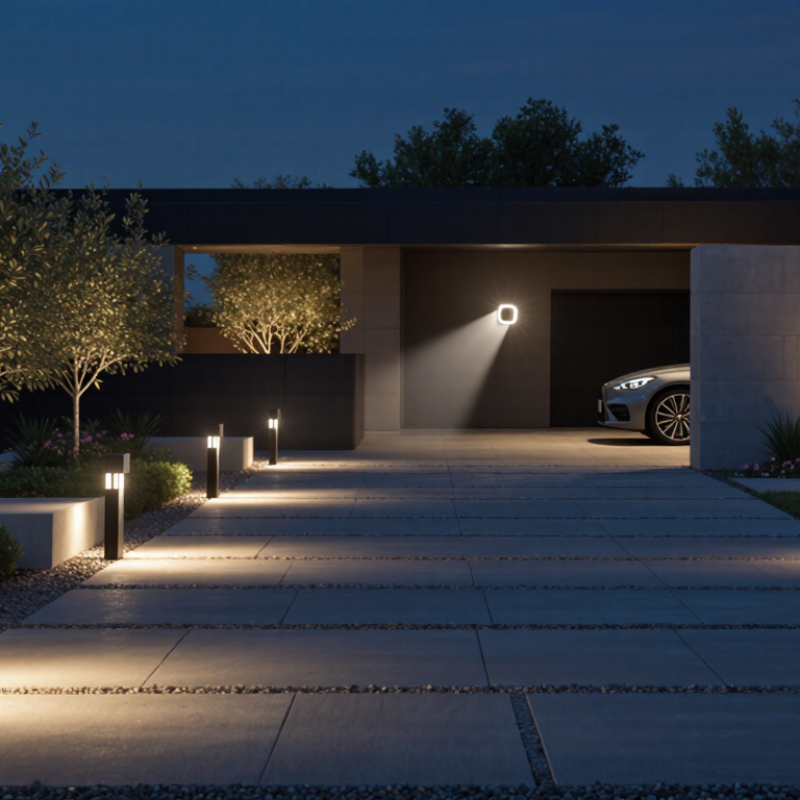
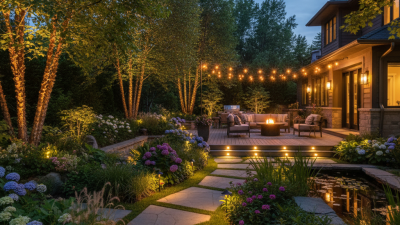
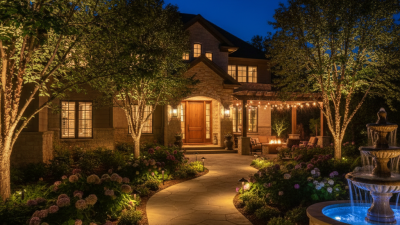
Outdoor lighting systems work best when their type matches the task. Pathway lights guide footsteps along driveways, garden edges, and uneven stone paths. Bollard lights provide stronger visual structure around entrances and parking areas. Wall-mounted fixtures improve door visibility, while floodlights cover patios, loading zones, and wider yards. In-ground lights can highlight trees, steps, or textured walls, but poor aiming may create glare.
Control matters as much as fixture selection. Photocells suit dusk-to-dawn security lighting. Timers work well for predictable garden use. Motion sensors reduce unnecessary operation near garages and side gates. Solar systems fit remote paths, although winter shade can reduce performance. The U.S. Department of Energy reports that LED lighting uses at least 75% less energy and lasts up to 25 times longer than incandescent lighting. That advantage becomes practical when fixtures are correctly shielded and maintained.
Color temperature affects comfort and safety. Warm light near 2700K to 3000K usually suits patios and residential gardens. Cooler light can improve contrast in work areas, but it may feel harsh. The International Energy Agency identifies lighting efficiency as an important route for reducing building electricity demand. However, brighter is not always better. I have seen small paths overlit, with glare hiding nearby steps. A reliable design should test light at eye level, check shadows after installation, and accept that the first layout may need adjustment.
| Lighting System Type | Primary Purpose | Common Applications | Typical Light Source | Typical Color Temperature | Recommended Protection | Energy and Maintenance Profile | Best Use Case |
|---|---|---|---|---|---|---|---|
| Pathway and Bollard Lighting | Provides low-level guidance and improves pedestrian visibility. | Garden paths, walkways, driveways, courtyards, and entrances. | LED | 2,700–3,000 K | Low energy consumption and low maintenance when LED fixtures are used. | Residential landscapes and pedestrian routes where glare control is important. | |
| Wall-Mounted and Bulkhead Lighting | Provides functional illumination near vertical surfaces and access points. | Doorways, garages, balconies, service areas, stairways, and building exteriors. | LED | 2,700–4,000 K | Efficient operation; occupancy or photocell controls can reduce operating hours. | Building entrances and exterior areas requiring reliable access lighting. | |
| Floodlighting | Delivers broad, high-output illumination across large outdoor areas. | Sports fields, parking areas, loading zones, building facades, and security perimeters. | High-output LED | 3,000–5,000 K | High initial output with lower energy use than older high-intensity discharge systems; requires accurate aiming. | Large spaces that need wide-area visibility or architectural emphasis. | |
| Security and Motion-Activated Lighting | Improves visibility and supports deterrence around vulnerable areas. | Side yards, gates, back entrances, parking areas, and storage zones. | LED with motion sensor | 3,000–5,000 K | Very efficient when activated only when movement is detected; sensor calibration is required. | Locations where lighting is needed intermittently rather than continuously. | |
| In-Ground and Recessed Lighting | Creates discreet accent lighting and highlights architectural or landscape features. | Driveways, decks, retaining walls, steps, trees, signage, and facade details. | LED | 2,700–3,500 K | Low energy use, but installation quality and drainage are important for long-term reliability. | Decorative projects requiring a concealed fixture appearance. | |
| Deck, Step, and Handrail Lighting | Provides localized safety lighting while adding visual interest. | Outdoor stairs, decks, patios, ramps, handrails, and seating areas. | Low-voltage LED | 2,700–3,000 K | Low power demand and long service life; wiring should be protected from moisture and physical damage. | Residential outdoor living spaces and changes in level. | |
| String and Decorative Lighting | Adds ambient or festive illumination rather than high-level task lighting. | Patios, pergolas, restaurants, event spaces, balconies, and gardens. | LED | 2,200–3,000 K | Low energy use; inspect cables, sockets, and mounting points regularly. | Atmosphere and decorative enhancement in low-risk outdoor areas. | |
| Solar-Powered Stand-Alone Lighting | Provides lighting without a direct electrical connection. | Remote paths, gardens, signs, parks, and locations where trenching is difficult. | LED with rechargeable battery | 2,700–4,000 K | No grid electricity during operation; performance depends on sunlight, battery capacity, and seasonal conditions. | Small or remote installations with adequate daily solar exposure. | |
| Low-Voltage Landscape Lighting | Combines safety, accent, and area lighting through a distributed outdoor circuit. | Residential gardens, resorts, pathways, patios, trees, water features, and outdoor structures. | LED, typically 12 V or 24 V systems | 2,700–3,500 K | Lower electrical voltage and efficient LED fixtures; requires correct transformer sizing and cable layout. | Flexible landscape designs with multiple fixture types and zones. | |
| Smart and Network-Controlled Lighting | Enables scheduling, dimming, zoning, remote control, and automated responses. | Homes, commercial properties, hospitality venues, campuses, and public landscapes. | Connected LED fixtures or LED controllers | 2,700–5,000 K, depending on design | Can reduce energy use through schedules and sensors; requires compatible controls and network maintenance. | Projects needing centralized management, adaptive lighting, or multiple operating scenes. |