Leave Your Message

2026 Top Smart LED Downlight Types for Global Buyers

Choosing a Smart Led Downlight in 2026 requires more than comparing wattage and retail prices. Global buyers now examine optical comfort, control compatibility, installation conditions, and long-term service. A 9W model may look efficient, yet its beam can create harsh circles on a hotel wall. Another model may offer tunable white light, but its mobile application could frustrate installers after handover. Small details matter.

This guide introduces the leading Smart Led Downlight types for homes, offices, hotels, retail spaces, and public buildings. It considers fixed, adjustable, recessed, surface-mounted, color-tunable, and sensor-integrated designs. Each type has practical strengths and limitations. Check the cutout size. Confirm the driver location. Review CRI, flicker performance, beam angle, dimming range, and thermal management. A warm 2700K setting may suit a restaurant, while 4000K often supports focused office work. IP ratings also deserve attention in bathrooms and covered outdoor areas.

Compatibility remains a frequent purchasing risk. Wi-Fi, Bluetooth Mesh, Zigbee, DALI, Matter, and other systems do not provide identical commissioning experiences. Regional voltage, certification requirements, warranty terms, and spare-part availability should be verified before volume orders. Experienced buyers often request samples, photometric files, driver data, and installation videos. That process feels slower, but it can reveal hidden problems early.

No product fits every project. I may be overly cautious here. However, reliable lighting decisions need evidence, not attractive packaging. The following overview helps buyers compare performance, usability, compliance, and lifecycle value with clearer expectations.

2026 Top Smart LED Downlight Types for Global Buyers

What Are Smart LED Downlights and How Do They Work?

2026 Top Smart LED Downlight Types for Global Buyers

What Are Smart LED Downlights and How Do They Work?

Smart LED downlights are recessed fixtures with LED chips, a driver, and digital control hardware. They provide focused ceiling lighting while supporting dimming, scheduling, and remote control. Some models adjust brightness automatically through occupancy or daylight sensors. Others change color temperature from warm evening light to cooler task lighting.

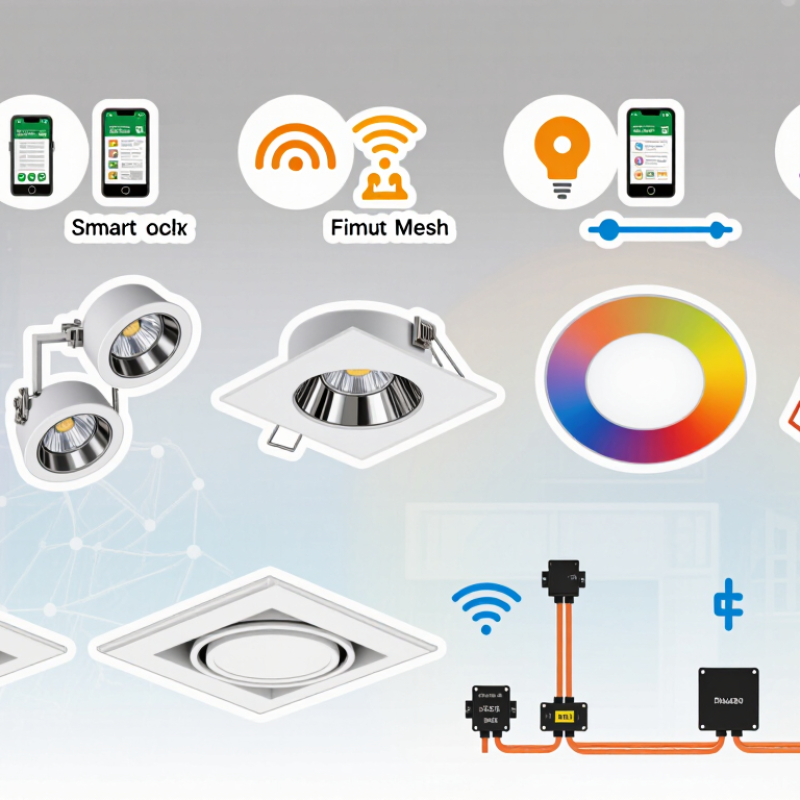
Common connection types include Wi-Fi, Bluetooth Mesh, Zigbee, and newer unified smart-home standards. Wi-Fi models connect directly with a router, while Zigbee systems usually need a compatible hub. Bluetooth Mesh can suit apartments because nearby fixtures communicate with each other.

A user sends a command through an app, switch, voice controller, or sensor. The control signal reaches the driver, which adjusts current flowing to the LEDs.

In practical installations, thermal design matters as much as software. A poorly ventilated ceiling can shorten component life and create visible brightness changes. Buyers should check beam angle, cutout size, color-rendering performance, flicker behavior, insulation contact, and local electrical certification. Moisture ratings are also important for bathrooms or covered outdoor areas. I have found that advertised smart features can look impressive, yet basic dimming may feel rough at low brightness. This is easy to miss in a showroom. Testing one sample at night can reveal noise, delay, glare, and uneven color. xikombiso

Key Types of Smart LED Downlights for Global Buyers

Smart LED downlights now come in several practical types for global buyers. Fixed recessed downlights provide clean, even lighting for bedrooms, offices, and corridors. Gimbal downlights tilt toward artwork or work surfaces. Retrofit models fit existing ceiling cutouts, reducing installation time and waste. Check the cutout size carefully; a few millimeters can create problems.

Connectivity also separates one type from another. Wi-Fi downlights suit homes needing direct app or voice control. Bluetooth models work well in smaller rooms and remain useful when internet service is unavailable. Zigbee or Matter-compatible downlights can support larger, coordinated lighting systems, but buyers should confirm hub and platform compatibility. Some products offer tunable white light, ranging from warm evening tones to cooler task lighting. RGBW versions add colored effects, although color features may matter less in offices.

Technical details deserve close attention. Select the correct input voltage and confirm the driver supports local electrical conditions. Look for low flicker, suitable dimming performance, accurate color rendering, and a realistic lifetime rating. Wet-area installations may require an appropriate IP rating. Installers commonly test dimming at the site because compatibility is not always predictable. I have found that a bright specification sheet cannot replace a real ceiling test. One type will not fit every project. Performance can vary between rooms.

2026 Top Smart LED Downlight Types for Global Buyers - Key Types of Smart LED Downlights for Global Buyers

Smart LED Downlight Type Typical Power Range Typical Cutout / Size Light Control Connectivity Color Temperature Typical Beam Angle Common Applications Key Buyer Considerations
Wi-Fi Tunable White Downlight 6–15 W 68–125 mm cutout; approximately 90–150 mm outer diameter On/off, dimming, scheduling, tunable white 2.4 GHz Wi-FiMobile AppVoice Control Approximately 2,700–6,500 K 36°–100° Homes, apartments, hospitality rooms, home offices, renovation projects Confirm router compatibility, app platform, standby power, local radio requirements and neutral-wire requirements.
Bluetooth Mesh Smart Downlight 6–18 W 75–150 mm cutout; approximately 95–175 mm outer diameter Group dimming, scenes, scheduling, tunable white or RGBW Bluetooth MeshGateway Optional Approximately 2,700–6,500 K; RGBW versions available 24°–60° Residential rooms, retail displays, restaurants, multi-light installations Suitable for synchronized groups; verify maximum mesh size, gateway functions, commissioning method and smartphone support.
Zigbee Smart Downlight 7–20 W 75–175 mm cutout; approximately 95–200 mm outer diameter Remote dimming, scenes, occupancy routines, tunable white ZigbeeHub Required Approximately 2,700–6,500 K 30°–100° Smart homes, hotels, offices, managed residential developments Check Zigbee profile and hub interoperability, network range, firmware support and local certification requirements.
Matter-Compatible Smart Downlight 6–18 W 68–150 mm cutout; approximately 90–175 mm outer diameter On/off, dimming, scenes and selected tunable-white functions MatterWi-Fi or Thread Approximately 2,700–6,500 K, depending on model 36°–100° New smart-home projects requiring cross-platform control Verify the supported Matter device type, controller compatibility, Thread border-router needs and feature limitations.
DALI-2 Smart Downlight 8–30 W 100–200 mm cutout; approximately 125–225 mm outer diameter Digital dimming, grouping, scenes, daylight and occupancy control DALI-2Wired Bus Approximately 2,700–6,500 K; fixed-white versions common 24°–90° Offices, schools, hotels, retail, commercial buildings and large projects Requires compatible drivers and control infrastructure; check IEC 62386-related device compatibility and commissioning requirements.
0–10 V / 1–10 V Dimmable Smart Downlight 8–35 W 100–225 mm cutout; approximately 125–250 mm outer diameter Analog dimming, centralized scene and building-control integration 0–10 V1–10 VWired Control Approximately 2,700–4,000 K; tunable-white versions also available 24°–90° Offices, retail stores, educational facilities and commercial interiors Confirm whether the driver uses 0–10 V or 1–10 V, minimum dimming level, control polarity, auxiliary power and emergency-lighting compatibility.
RGBW Color-Tunable Smart Downlight 8–24 W 75–175 mm cutout; approximately 95–200 mm outer diameter White-light adjustment, RGB color scenes, dimming and scheduling Wi-FiBluetoothZigbee White channel typically approximately 2,700–6,500 K plus RGB color output 30°–100° Entertainment areas, restaurants, hospitality, retail and feature lighting Evaluate white-light quality separately from color effects; check color consistency, color rendering, app functions and heat management.
Occupancy-Sensor Smart Downlight 8–25 W 100–200 mm cutout; approximately 125–225 mm outer diameter Automatic on/off, absence detection, dimming and daylight response PIRMicrowaveBluetooth Mesh Typically 3,000–4,000 K; tunable-white options available 60°–120° Corridors, bathrooms, utility rooms, offices, storage areas and stairways Check detection range, mounting height, sensor privacy characteristics, time-delay settings and false-trigger performance.
Emergency-Backup Smart Downlight 8–25 W normal operation; emergency output varies by design 100–200 mm cutout; approximately 125–225 mm outer diameter Normal dimming plus automatic emergency operation during power loss DALI-2Self-Test OptionsWired Monitoring Typically 3,000–4,000 K 60°–120° Public buildings, offices, hotels, schools, retail and circulation areas Check battery type, rated emergency duration, recharge time, self-test function, exit-route requirements and national emergency-lighting regulations.
IP-Rated Bathroom and Outdoor Smart Downlight 6–20 W 68–175 mm cutout; approximately 90–200 mm outer diameter Dimming, scheduling, scenes and color-temperature adjustment Wi-FiBluetoothZigbee Approximately 2,700–6,500 K 36°–100° Bathrooms, covered outdoor areas, eaves, spas and moisture-prone interiors Confirm the complete installed assembly’s IP rating, ceiling-zone suitability, corrosion resistance, driver location and temperature range.

Buyer note: Specifications are typical market ranges for product comparison. Actual performance depends on the LED module, driver, housing, control protocol, installation conditions and the regulations applicable in the destination market.

Control Systems, Connectivity, and Smart Home Compatibility

Smart LED downlights now differ mainly in how they communicate and respond. Wi-Fi models connect directly to a home network, making remote control simple. However, many units may increase network traffic in larger projects. Bluetooth Mesh supports room-to-room control without relying on constant internet access. Zigbee-based systems can coordinate many lights efficiently through a compatible hub.

Control options should match the building, not only the phone application. Wall switches, motion sensors, daylight sensors, and scheduled scenes create more practical lighting. A kitchen might use bright, cool light during preparation and softer light during dinner. Voice control adds convenience, but local manual control remains essential. Internet outages happen. So do forgotten passwords.

For wider smart home compatibility, buyers should check supported protocols, app permissions, firmware updates, and gateway requirements. Matter support can simplify communication across compatible platforms, but compatibility is not always complete. Some advanced dimming scenes still depend on the manufacturer’s controller. This is where product testing matters. I recommend checking voltage range, dimmer behavior, reset procedures, and data security before installation. A downlight may connect quickly in a showroom, yet perform poorly through thick walls or crowded networks. Installers should also test wireless coverage after mounting, because metal ceilings and concrete can weaken signals. The “universal” label deserves careful questioning.

2026 Top Smart LED Downlight Types for Global Buyers

Control Systems, Connectivity, and Smart Home Compatibility

The chart compares the theoretical physical-layer data rates of common connectivity options used in smart LED downlight systems. Wi-Fi provides the highest bandwidth for direct cloud and local-network control, while Thread, Zigbee, and Bluetooth Mesh prioritize low power consumption, mesh networking, and reliable room-to-room control. Matter is an application-layer standard that can operate over Wi-Fi, Thread, and Ethernet rather than functioning as a separate radio technology.

Essential Performance, Safety, and Energy Efficiency Criteria

Choosing smart LED downlights in 2026 requires more than comparing lumen figures. Global buyers should examine performance, safety, and energy efficiency together. A suitable light delivers stable brightness, accurate colour rendering, and comfortable visual conditions in real rooms.

Check the measured lumen output, not only the advertised wattage. A 9-watt lamp may perform differently after thermal testing. Look for a CRI of 90 or higher in homes, galleries, and hospitality areas. Adjustable colour temperature can support warm evening lighting and cooler task lighting. However, colour tuning is not always necessary. It can also increase cost and system complexity.

Safety begins with the installation environment. Confirm the correct ceiling insulation rating, fire protection, and IP level for each location. Bathrooms and covered outdoor areas need stronger moisture protection than dry bedrooms. Reliable drivers should resist voltage fluctuations and limit heat buildup. Flicker testing matters, especially in offices, shops, and spaces using cameras. Dimming must match the control system, whether wireless, phase-cut, or another approved protocol.

Energy efficiency includes standby consumption. A smart downlight that remains connected all day can waste energy quietly. Check power use at full brightness and during network standby. Request test reports, electrical safety certificates, and regional compliance documents from suppliers. Standards differ between markets. Do not assume one certificate covers every country.

Small details matter.

In practice, no specification sheet tells the whole story. Ceiling colour, room height, and diffuser design change perceived brightness. Sample testing before a large purchase remains worthwhile, even when the numbers look convincing.

How to Select Smart LED Downlights for Different Markets

2026 Top Smart LED Downlight Types for Global Buyers

How to Select Smart LED Downlights for Different Markets

Smart LED downlights should match local buildings, wiring, climate, and user habits. A product suitable for an apartment in Germany may fail in a humid coastal region. Check the local voltage range, ceiling depth, and available neutral wire before ordering. Measure twice.

For residential markets, adjustable white light can support bedrooms, kitchens, and home offices. Dimming performance matters more than impressive app features. Test the downlight with common wall controllers and verify that low brightness remains stable. In hospitality projects, scene control, occupancy sensing, and centralized scheduling can reduce daily maintenance. However, overly complex controls may confuse staff and guests.

Commercial buyers should examine heat management, driver replacement, glare control, and expected operating hours. Offices often need comfortable, low-glare illumination, while retail spaces may require accurate color rendering. In humid or dusty areas, select suitable ingress protection and corrosion-resistant materials. Smart functions should also remain usable if the internet connection fails. Local electrical certifications and wireless requirements must be confirmed by qualified professionals.

From installation projects, one lesson is clear: specifications alone do not predict field performance. A compact housing may simplify installation but limit heat dissipation. High color quality may increase cost without adding value in storage areas. Pilot testing with local installers can reveal these trade-offs before large-scale purchasing. I would not approve a global model without regional samples, real ceiling tests, and documented after-sales support.