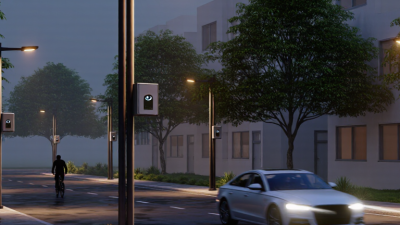
2026 Best Wireless Street Light Control System Types?
Choosing the 2026 Best Wireless Street Light Control System Types requires more than comparing signal range or software dashboards. Municipal teams should examine coverage, outage resilience, cybersecurity, maintenance effort, and total ownership cost. A controller that looks affordable may become expensive when technicians need special equipment for every pole.
James Brodrick, a respected U.S. Department of Energy lighting expert, once observed, “The LED revolution is really just the beginning.” His point remains relevant as connected controls expand beyond simple on-and-off switching. A modern Wireless Street Light Control System can dim fixtures by schedule, detect lamp failures, report energy use, and support adaptive lighting near roads, parks, and pedestrian crossings.
Several system types deserve close attention in 2026. RF mesh networks can reroute messages around damaged nodes, which suits dense urban streets. LoRaWAN offers long range and low power, although building interference may affect performance. Cellular systems, including LTE-M and NB-IoT, simplify wide-area deployment but create continuing subscription costs. Wi-Fi can work near facilities, yet it is rarely ideal for scattered roadside poles.
Field experience matters.
Installers should test signal strength from actual pole locations, not only from a planning map. They should also confirm gateway placement, firmware update procedures, data ownership, and compatibility with existing LED drivers. Standards-based interfaces can reduce vendor lock-in, but compatibility claims still require testing.
No single network wins everywhere. That is the uncomfortable part. The best choice depends on street density, terrain, climate, staffing, and public safety goals. This guide compares the leading system types, their practical strengths, their limitations, and the details buyers may overlook before deployment.
What Is a Wireless Street Light Control System?
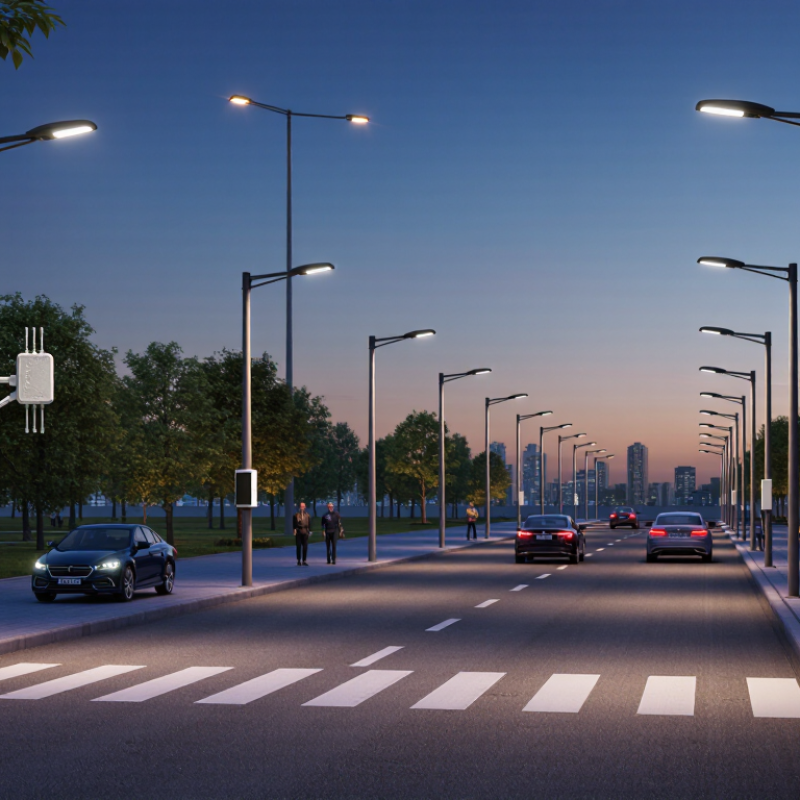
A wireless street light control system connects lamps, communication devices, and management software without relying on control cables. A small controller is installed inside, or beside, each light. It can switch the lamp, adjust brightness, and report faults remotely. Signals travel through radio, cellular, or low-power mesh networks. Small signals, large results.
Common system types include node-based, mesh, cellular, and hybrid designs. In a node-based setup, each lamp communicates with a nearby gateway. Mesh networks pass signals between neighboring fixtures, which can help in long streets.
Cellular systems send data through existing mobile networks. Hybrid systems combine these methods when buildings, trees, or distance weaken radio communication.
In practical installations, technicians check signal strength at pole height, not only from a vehicle. They also test dimming schedules, power-loss recovery, and manual override controls. A reliable system should record energy use and identify failed lamps clearly. Secure authentication and encrypted communication protect operational data. Physical enclosures need suitable weather protection, too.
It is not magic. A weak antenna, poor grounding, or incorrect time setting can still cause failures. This is where many plans need more reflection: remote control reduces routine visits, but it does not remove the need for careful commissioning and local inspection.
How Wireless Street Light Control Systems Work
How Wireless Street Light Control Systems Work
Wireless street light control systems connect lamps, sensors, gateways, and software without new control cables. A wireless node attaches to each luminaire. It receives commands, measures power, and reports faults. Mesh networks pass signals between nearby poles. Cellular and low-power wide-area networks send data over longer distances. A central management platform schedules dimming, detects outages, and records energy use. Simple in operation, but not always simple in the field.
The International Energy Agency reports that lighting consumes about 15% of global electricity. This makes control accuracy important. Dimming can reduce output after midnight, while motion sensors restore brightness near pedestrians or vehicles. Photocells measure daylight and prevent unnecessary operation. The U.S. Department of Energy notes that advanced lighting controls can deliver meaningful energy savings, although results depend on settings, traffic, weather, and maintenance. A useful system also sends alerts for failed drivers, abnormal power draw, and communication loss. No system is perfectly smart. Radio interference, metal structures, and weak network planning can create blind spots. That part is often underestimated.
Tips: Test signal strength at pole level, not only from a vehicle. Keep manual override access for emergencies and maintenance. Compare actual meter data with software estimates each month. Industry reports often show attractive savings, but local audits reveal the less comfortable truth: poorly tuned schedules can waste energy even with modern hardware.
What Are the Main System Types in 2026?
In 2026, wireless street light control systems mainly fall into three types: RF mesh, cellular IoT, and LPWAN.
RF mesh connects nearby luminaires through multi-hop communication. It suits dense roads, campuses, and city centers. If one node fails, traffic can often reroute through another node. However, metal structures and irregular layouts may weaken signals. Commissioning still matters.
Cellular IoT uses 4G, LTE-M, NB-IoT, or emerging 5G networks. It provides direct communication between each light and the management platform. This design fits highways, scattered assets, and large municipal areas. Network fees and operator dependence remain practical concerns.
LPWAN systems, including LoRa-based networks, prioritize long battery life and wide coverage. They work well for basic switching, dimming, and sensor messages. Data capacity is limited.
A hybrid system combines these methods. For example, RF mesh can manage a neighborhood, while cellular backhaul links the controller to the cloud. This is often more resilient, though less tidy.
MarketsandMarkets projected the global smart lighting market to grow from USD 15.2 billion in 2024 to USD 39.9 billion by 2029, at a 21.3% CAGR. IoT Analytics estimated about 18.8 billion connected IoT devices worldwide by the end of 2024. These figures show strong infrastructure momentum, but they do not guarantee better street lighting. Cities should compare coverage, cybersecurity, maintenance access, dimming response, and five-year operating costs. The cheapest radio can become expensive later.
How to Compare Control, Communication, and Network Options
2026 Best Wireless Street Light Control System Types?
Choosing a wireless street-light system requires more than counting dimming features. Compare control, communication, and network options against real streets, maintenance teams, and weather. A European Commission Joint Research Centre review found adaptive lighting pilots reporting energy savings of up to 40%. Results varied by schedule, traffic, and sensor accuracy. That warning matters.
Control options include cabinet-level switching, node-level dimming, motion response, and calendar-based scenes. Node-level control gives each lamp a digital address. It also creates more devices to inspect. Mesh networks can route signals around blocked paths, while cellular networks simplify coverage across scattered roads. Low-power wide-area networks reduce battery demand, but they may respond more slowly. The U.S. Department of Energy’s SSL R&D reports identify connectivity and controls as important upgrades beyond LED conversion. Still, a perfect dashboard cannot repair weak antennas or poor commissioning.
Tips: Test one busy road and one quiet road. Measure response time, outage alerts, energy use, and nighttime visibility. Ask whether the platform supports open interfaces, local fallback control, encrypted communication, role-based access, and exportable data. Keep a manual override. It may feel old-fashioned, but storms and network failures expose fragile designs. I would also budget for firmware updates and sensor replacement. Those costs are easy to underestimate.
Which Wireless Street Light Control System Fits Each Project?
2026 Best Wireless Street Light Control System Types?
The right wireless street light control system depends on the project, not its advertised feature list. A small residential road may need simple dusk-to-dawn scheduling and fault alerts. A busy urban corridor needs dimming, traffic response, energy records, and secure remote management. For isolated highways, long-range low-power communication can reduce gateway requirements. Cellular control may fit scattered poles, but recurring data fees deserve careful review.
The U.S. Department of Energy reports that LED street lighting can reduce lighting energy use by roughly 50–70%. Networked controls can create further savings, although results depend on schedules, traffic, and maintenance quality. The International Energy Agency has estimated that lighting uses about 15% of global electricity demand. That makes control accuracy important, especially across large municipal networks.
Project teams should test radio performance beside concrete walls, trees, and power equipment. Field audits often reveal weak signals near tunnels and crowded intersections. Mesh networks suit dense streets with many nearby poles. Star-based systems can simplify rural layouts, but one failed gateway may affect a wide area. NIST guidance on IoT security supports device authentication, encrypted communication, and planned software updates. A perfect specification can still fail during storms. Teams should also budget for replacement nodes, technician training, and manual operation when the network is unavailable.
2026 Best Wireless Street Light Control System Types
Which wireless street light control system fits each project?
The indicative 1–5 suitability scores compare common engineering characteristics such as communication range, network scalability, indoor or underground coverage, power efficiency, infrastructure requirements, and deployment complexity. RF mesh is generally strong for dense municipal networks, cellular is suitable for dispersed assets, LoRaWAN for low-power wide-area deployments, and Wi-Fi mesh for sites with existing broadband coverage.