





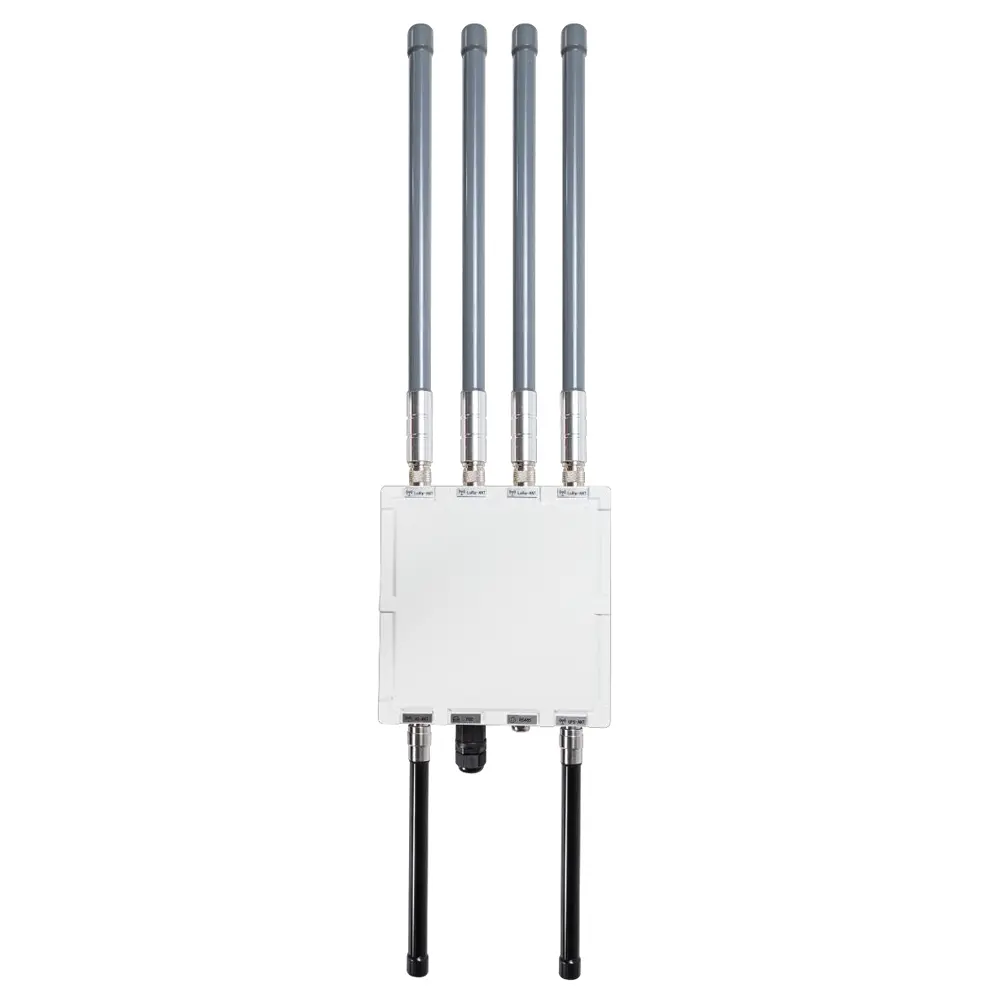
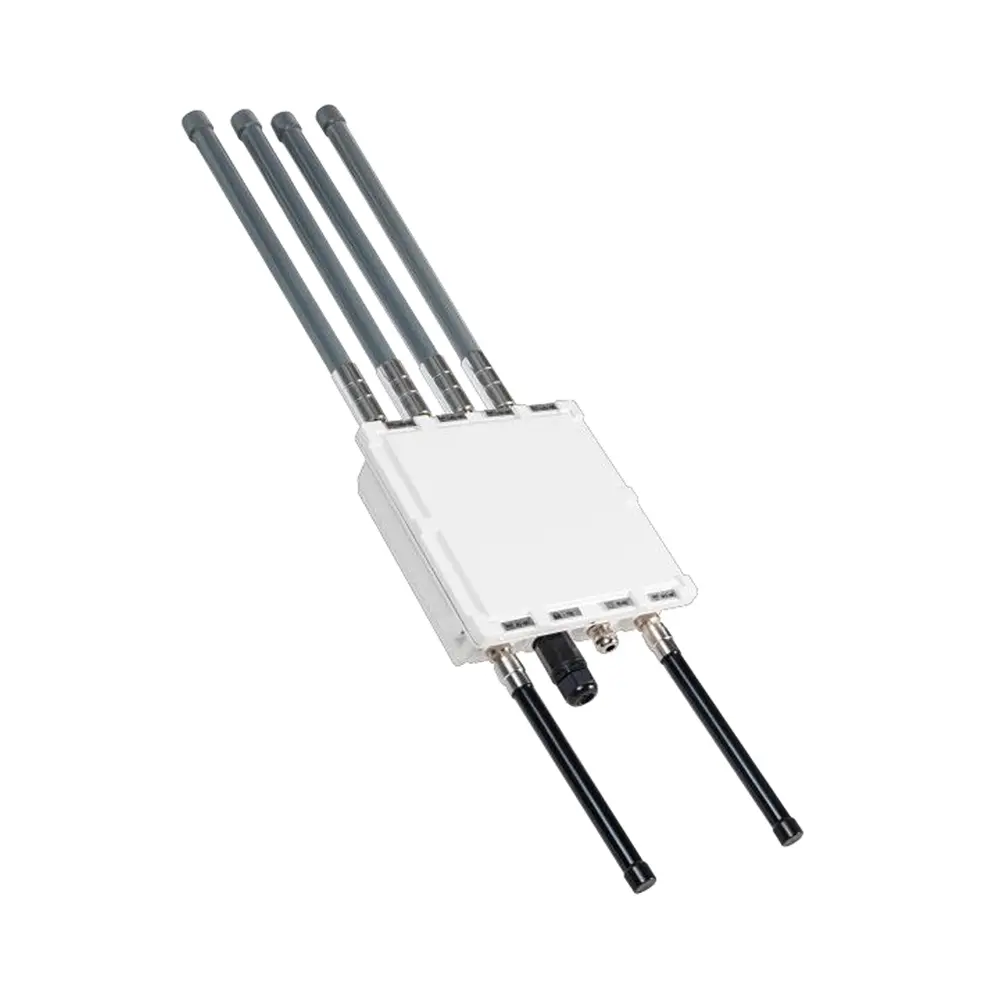
China LoRaWan Gateway with 8 Channels for Smart Street Light Management - Reliable Factory Suppliers
Overview
In the era of smart cities, the need for efficient and sustainable infrastructure has become more important than ever. One of the key components of smart cities is the implementation of smart street lights, which not only provide lighting but also help save energy and improve safety. In order to achieve seamless operation of smart street lights, the integration of advanced technologies such as LoRaWAN (Long Range Wide Area Network) becomes crucial. This is where LoRaWAN gateways come into play, a key component in smart streetlight deployments in smart cities.
The LoRaWAN gateway acts as a bridge between smart street lights and the central network, facilitating communication and data exchange between smart nodes and cloud-based management systems. This enables real-time monitoring, control and optimization of street lighting infrastructure, resulting in significant energy savings and improved operational efficiency. With its long-range capabilities and low power consumption, LoRaWAN gateways are ideally suited to the requirements of smart city applications, providing reliable connectivity and seamless integration with smart street lights.
LoRaWAN gateways play a key role in the development of smart street lights in smart cities, providing reliable and efficient connectivity for smart nodes. By leveraging the capabilities of LPWAN (Low Power Wide Area Network) technology, LoRaWAN gateways help achieve energy-efficient, sustainable and connected urban environments. With its advanced capabilities and seamless integration, LoRaWAN gateways are expected to drive the transformation of future smart city street lighting infrastructure.
Feature and Function
Datasheet
| LoRaWan IoT Gateway of smart streetlight for C-LUX Gen2 smart street light management system |
|
|---|---|
| Input Voltage | 12V~36V (Better 12V/1A) |
| Power | <1W |
| Working temperature | -40~80℃ |
| Interface | RJ45+DC |
| Control interface | DALI 2 / DiiA (IEC 62386) |
| Waterproof | IP67 |
| Working bands | CN470MHz / US915MHz / EU868MHz |
| Transmitting power | <23dBm |
| Receiving sensitivity | >142.5dBm |
| Communication distance | Urban: 5Km; Suburban: 15Km |
| Signal input | LAN, 2G/3G/4G |
| Data protocol | UDP / TCP / MQTT |
| LoRa antennae | T-NC Female Connector |
| Cat1 antennae | T-NC Female Connector |
Frequently Asked Questions (FAQ)
What is the primary role of this LoRaWAN gateway in smart street lighting?
The LoRaWAN gateway acts as a vital bridge between individual smart street light nodes and cloud-based central management systems. It facilitates bidirectional communication, data acquisition, real-time monitoring, and remote lighting schedule adjustments to minimize energy waste and operational costs.
What is the typical communication distance of the gateway?
The gateway covers long-distance wireless transmissions of approximately 5 kilometers across dense urban environments and up to 15 kilometers in open suburban areas, providing broad coverage for municipal networks.
How many smart streetlight controllers can one gateway connect?
Equipped with 8 receiving channels (8Rx/1Tx Time Duplex), a single gateway is specified to manage and integrate up to 2,000 smart streetlight controllers or IoT network devices.
Can the gateway withstand extreme outdoor conditions?
Yes, it features an IP67-rated waterproof, snow-proof, and lightning-protected enclosure engineered to operate consistently within an industrial temperature range from -40°C to +80°C.
Which network interfaces and cloud protocols does it support?
For backhaul network connectivity, the gateway supports Ethernet (RJ45) as well as 2G/3G/4G Cat-1 cellular connections. It supports standardized IoT transport protocols including UDP, TCP, and MQTT, alongside DALI 2 / DiiA (IEC 62386) control compatibility.
What mounting options are available for installation?
The gateway is engineered for versatile physical installation across varied urban environments, offering mounting compatibility for poles, walls, communication towers, building surfaces, and DIN rails.