Global buyers need more than a lower electricity bill. They need reliable Street Lighting Control that performs across climates, currencies, standards, and maintenance practices. The International Energy Agency reports that lighting represents about 15% of global electricity consumption. The U.S. Department of Energy also identifies connected controls as a major opportunity for reducing outdoor lighting energy use. However, savings depend on correct commissioning, not attractive product claims.
Jesse Berst, founder of the Smart Cities Council, has described smart streetlights as “the low-hanging fruit of smart cities.” The phrase is useful, but incomplete. A controller installed beside a coastal road faces salt, moisture, vibration, and unstable communications. A unit serving a remote village may need local scheduling when the network fails. Buyers should examine dimming protocols, such as DALI-2 or 0–10V, connector compatibility, IP and IK ratings, cybersecurity updates, warranty terms, and spare-part availability. Check the details.
This guide presents 10 Street Lighting Control tips for global buyers. It connects energy performance with practical procurement decisions, including pilot testing, interoperability, data ownership, and total cost of ownership. The Global Lighting Association and public-sector efficiency programs repeatedly emphasize lifecycle value rather than purchase price alone. Still, no report replaces field evidence. A carefully monitored pilot may reveal weak radio coverage, confusing software, or maintenance delays. Those findings are not failures. They are useful warnings before a large deployment.
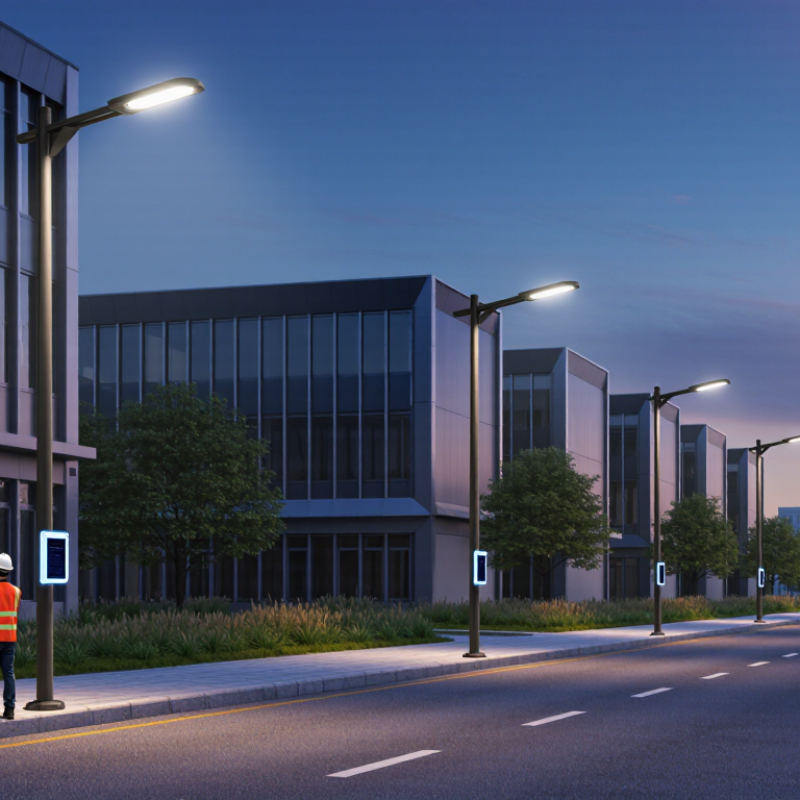
Street lighting control systems combine hardware, communication, and software to manage outdoor illumination. Their core components include a central controller, dimming driver, photocell, motion sensor, and electrical cabinet. Some systems communicate through wireless networks, while others use wired connections. Each option affects installation cost, maintenance, and reliability.
A practical controller should support scheduled dimming and remote fault alerts. Photocells measure natural light and prevent unnecessary daytime operation. Motion sensors can increase brightness when pedestrians or vehicles approach. Surge protection is essential in areas with frequent storms. Tip: Check compatibility between the controller, driver, and lamp before purchasing. A mismatch may cause flickering or failed dimming.
Global buyers should also examine network coverage, data security, and local service capability. Ask how technicians replace a failed controller in a wet cabinet or under heavy traffic conditions. Simple access matters. During field testing, inspect connection stability, cabinet sealing, and actual power savings at night. Laboratory claims may not match dusty roads or extreme temperatures. A common mistake is focusing only on unit price. Long-term maintenance often costs more. I have seen control projects underperform because sensor settings were copied without studying local traffic patterns. Flexible settings are safer. Keep records of faults, energy use, and seasonal changes, then adjust the system carefully.
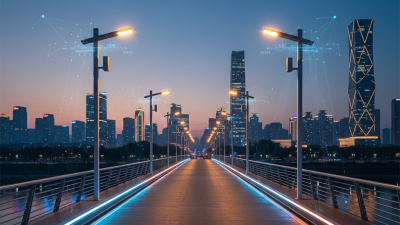
A practical comparison table for evaluating control architectures, components, connectivity, operating requirements, and project risks.
| No. | Buying Tip | Main System Component | Key Technical Data | Recommended Requirement | Typical Application | Buyer Check |
|---|---|---|---|---|---|---|
| 01 | Define the control objective first Decide whether the project needs basic switching, scheduled dimming, adaptive lighting, monitoring, or fault management. |
Control architecture | Common levels include standalone, cabinet-based, wireless networked, and cellular/cloud-managed systems. | Match system complexity to the number of luminaires, road hierarchy, maintenance policy, and available budget. | Residential streets, highways, public areas, tunnels, and smart-city corridors. | Request a complete system diagram before comparing prices. |
| 02 | Verify dimming compatibility The controller must communicate correctly with the LED driver installed in the luminaire. |
LED driver and dimming interface | Typical interfaces include 0–10 V, digital lighting interfaces, pulse-width modulation, and relay switching. | Confirm dimming range, minimum stable output, control polarity, driver current, and standby power. | LED roadway and area lighting retrofits or new installations. | Obtain driver datasheets and perform a sample-luminaire test. |
| 03 | Select the appropriate sensing method Use astronomical schedules, photocells, motion sensors, or a combination of methods. |
Photocell, motion, and environmental sensors | Photocells respond to ambient light; motion sensors respond to occupancy; astronomical clocks use date, time, and location data. | Use sensor placement, detection range, response delay, false-trigger resistance, and seasonal adjustment as selection criteria. | Low-traffic roads, pedestrian paths, parking areas, and parks. | Check the effect of trees, buildings, vehicle headlights, dust, and weather. |
| 04 | Choose the right communication technology Connectivity affects coverage, response time, installation cost, and long-term serviceability. |
Communication network | Options may include wired power-line communication, short-range radio mesh, low-power wide-area networks, or cellular networks. | Evaluate coverage, latency, antenna requirements, local spectrum rules, subscription fees, and network ownership. | Dense urban networks, long roads, remote corridors, and multi-site portfolios. | Ask for a site survey and a documented fallback mode during communication loss. |
| 05 | Check outdoor protection and temperature limits Street lighting equipment is exposed to rain, dust, heat, cold, vibration, and electrical surges. |
Controller enclosure and surge protection | Outdoor enclosures commonly use IP-rated protection; surge protection is normally specified by voltage, discharge current, and coordination. | Select protection suitable for the installation zone, local lightning exposure, pollution level, humidity, and operating temperature. | Coastal zones, tropical climates, cold regions, and lightning-prone locations. | Review enclosure rating, corrosion resistance, thermal derating, and surge-test documentation. |
| 06 | Plan schedules around real traffic patterns Time-based dimming should reflect road classification, traffic volume, pedestrian activity, and safety requirements. |
Astronomical timer and scheduling software | Schedules can be based on sunset, sunrise, fixed clock time, seasonal calendars, or event rules. | Provide local latitude, longitude, time zone, daylight-saving settings where applicable, and holiday exceptions. | Roads with predictable changes in traffic and pedestrian activity. | Require manual override and automatic recovery after power interruption. |
| 07 | Evaluate energy-saving potential realistically Dimming can reduce energy use, but actual savings depend on operating hours, load profile, traffic, and lighting requirements. |
Dimming profile and energy monitoring | A lower output level generally reduces power consumption; savings should be calculated from measured wattage and operating time. | Request a baseline calculation using installed load, annual operating hours, dimming levels, and electricity tariff. | Municipal energy-reduction programs and large retrofit projects. | Avoid guaranteed savings claims without a measurement and verification plan. |
| 08 | Require fault detection and reporting Remote monitoring can reduce inspection time and help prioritize maintenance. |
Monitoring platform and fault alarms | Useful data may include lamp status, power, voltage, current, energy consumption, communication status, and controller alarms. | Define alarm thresholds, event history, user roles, export formats, and service-response procedures. | Large networks where manual night inspections are costly or difficult. | Ask whether data remains accessible if the cloud service or cellular link is unavailable. |
| 09 | Confirm interoperability and future expansion A system should support replacement luminaires, additional sensors, and integration with existing municipal platforms. |
Open interfaces and data integration | Common integration requirements include documented application programming interfaces, standard data formats, secure user access, and replaceable controllers. | Specify data ownership, export rights, firmware policy, cybersecurity updates, and migration procedures. | Long-life infrastructure projects and phased city-wide deployments. | Avoid systems that require proprietary hardware for every future expansion. |
| 10 | Budget for installation, commissioning, and maintenance The purchase price is only one part of the total cost of ownership. |
Power cabinet, controller, software, and service support | Total cost may include hardware, mounting, communications, software licenses, training, commissioning, replacement parts, and field service. | Compare initial cost, recurring fees, expected service life, warranty terms, spare-part availability, and technician requirements. | Public tenders, international projects, and multi-year maintenance contracts. | Request a five- to ten-year total-cost-of-ownership estimate. |
Note: Technical requirements vary by country, road class, climate, utility regulations, electrical codes, and public-lighting standards. Buyers should validate final specifications through site surveys, photometric calculations, electrical assessments, interoperability tests, and local compliance reviews.
Local rules should shape the control plan before equipment is selected. Check permitted dimming hours, roadway classes, maximum glare, and inspection procedures. Requirements may differ between neighboring cities. Ask the local authority for written interpretations, especially where lighting controls affect pedestrian safety or traffic monitoring. Confirm electrical certifications, radio permissions, data protection duties, and maintenance access requirements. A compliance checklist is useful, but it can become outdated quickly.
Grid conditions deserve equal attention. Measure voltage variation, outage frequency, earthing quality, and available communications coverage. Some streets experience sudden surges after storms. Others have weak networks and long recovery times. Select controls that support safe local operation when communication fails. Test photocells, timers, cabinet protection, and manual overrides on a real circuit. Laboratory results alone are not enough.
Environmental assessment should include heat, freezing temperatures, dust, salt air, flooding, and insects. Coastal roads may need stronger corrosion protection. Desert routes can expose sensors to fine dust and extreme daytime heat. Consider upward light, seasonal darkness, migratory birds, and nearby homes. Lower brightness is not always better if crossings become unclear. We once treated a stable grid as a permanent condition; later testing showed frequent night voltage dips. That assumption needed correction. Build pilot installations near representative roads, record faults for several months, and let local technicians challenge the original design.
For global buyers, street-light control selection begins with operating conditions, not attractive dashboards. Smart controls support dimming, fault alerts, scheduling, and remote configuration. They suit large networks where labor costs and maintenance distances matter. However, software needs stable power, secure access, and trained operators. A connected cabinet is not automatically a smart one. Define response times, data ownership, and manual override procedures before signing contracts.
Sensors react to real conditions. Photocells measure daylight, while motion or radar sensors can brighten quiet roads when people appear. Sensor placement matters. Tree shadows, dust, rain, and snow can create false readings. Timers are simpler and often more dependable where connectivity is weak. Yet seasonal daylight changes can make fixed schedules waste energy. Procurement reviews often underestimate local cleaning and calibration work. That omission becomes expensive after installation.
Connectivity should match geography and operational risk. Cellular links suit dispersed poles, while mesh networks can serve dense districts. Long-range, low-power links may reduce energy demand, but coverage needs testing beside buildings and during wet weather. Request open communication protocols and exportable data. Compare total cost, including gateways, subscriptions, replacements, and security updates. Pilot ten to twenty poles before a citywide order. Measure light levels, outage detection, dimming accuracy, and resident complaints. Small pilots reveal uncomfortable assumptions.
Planning street lighting control begins with the road, not the software. Map pole spacing, cabinet locations, cable routes, and maintenance access before selecting equipment. A busy junction may need stronger signal coverage than a quiet industrial lane. Leave room for drainage, heat, and safe technician movement. Small oversights become expensive during night repairs.
Check compatibility at every layer. Confirm voltage ranges, communication protocols, dimming methods, sensor inputs, and cabinet dimensions. Existing lamps may respond differently to the same control command. Test ten representative fixtures before ordering hundreds. This is not always convenient. It prevents a costly surprise later. Installation teams should record connector types, firmware versions, and commissioning results with photographs. Clear records support faster troubleshooting across different countries.
Security must exist from the first design meeting. Use unique credentials, encrypted communication, role-based access, and controlled software updates. Disable unused ports and separate lighting networks from office systems where practical. Plan local fallback settings for communication failures. Lights should not become useless because a remote server is unavailable. Scalability also requires discipline. Start with a manageable zone, then expand through repeatable device naming, open interfaces, and documented capacity limits. A system that works for 200 poles may struggle at 20,000. Simulate that growth early, while changes are still affordable. Some projects still underestimate training and replacement stock. That weakness deserves honest review.
Evaluating energy savings starts with a measured baseline. Record operating hours, wattage, tariff periods, and seasonal traffic patterns. Choose controls that support scheduled dimming, not only simple on-and-off switching. Use astronomical clocks to adjust lighting automatically during changing sunset times. Motion or traffic sensors can reduce output on quiet roads. They need careful calibration, however. Excessive sensitivity may create frequent brightness changes and public complaints.
Check whether the control system supports open communication standards and local network conditions. Interoperability makes future upgrades less expensive. Ask for remote fault alerts, energy reports, and downloadable maintenance records. A dark lamp should generate a clear location and time stamp. Confirm enclosure protection against rain, dust, heat, and voltage surges. Coastal and tropical projects may need stronger corrosion resistance. Small details matter.
Maintenance planning should include modular drivers, accessible connectors, and stocked replacement parts. Request realistic repair times, not only attractive warranty periods. Local technician training can prevent unnecessary equipment removal. Evaluate software updates, cybersecurity procedures, and technical support across time zones. Energy savings may look impressive in a spreadsheet, but control failures can erase them quickly. A perfect forecast is unrealistic. Buyers should test a small area before approving a full deployment, then compare actual consumption, fault rates, and nighttime complaints.