How to Choose the Right Wireless Street Light Control System?
Choosing the right Wireless Street Light Control System is vital for modern urban infrastructure. With cities expanding, efficient lighting solutions become crucial. A well-designed system optimizes energy consumption and reduces operational costs.
Consider the specific needs of your environment. Different areas may require varied lighting intensity and control capabilities. An ideal system should adapt to these unique circumstances. Assess the reliability of the technology. Systems must withstand weather changes and require minimal maintenance to ensure longevity.
Explore the integration with existing smart city solutions. Compatibility enhances the benefits of your Wireless Street Light Control System. Furthermore, evaluate user experience and feedback from other municipalities. Sometimes, systems marketed as advanced may fall short in real-world application. Always be open to refining your choices based on practical outcomes.

Understanding the Basics of Wireless Street Light Control Systems
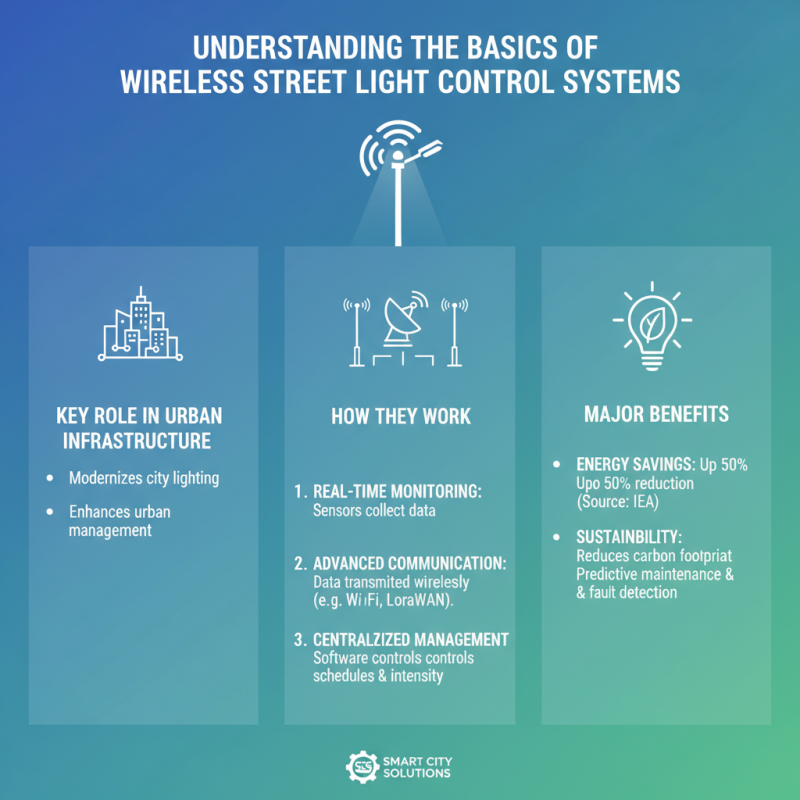
Wireless street light control systems play a vital role in modern urban infrastructure. By utilizing advanced communication technologies, these systems enable real-time monitoring and management of street lighting. According to a recent study by the International Energy Agency, efficient street lighting can reduce energy consumption by up to 50%. Understanding how these systems function is essential for cities looking to enhance their sustainability.
The basic concept involves integrating smart sensors and controls with existing lighting infrastructure. Sensors collect data on brightness levels, weather conditions, and pedestrian activity. This collected data allows for adaptive lighting, improving safety while reducing energy waste. However, many cities face challenges when implementing these systems. Compatibility with existing infrastructure is a common concern. According to a report from the Smart Cities Council, over 30% of cities find integration issues as a significant barrier.
While wireless control systems show promise, they are not without flaws. Reliability can be a concern, particularly in areas with poor network coverage. Additionally, initial setup costs can deter investment. A report published by the Global Smart Lighting Association revealed that many municipalities hesitate due to perceived complexities. To make informed decisions, city planners must weigh the benefits against these potential drawbacks.
Evaluating Different Types of Wireless Technologies for Street Lighting
When evaluating wired technologies for street lighting, several factors must be considered.
Wi-Fi, Zigbee, LoRa, and cellular networks each have unique advantages.
Wi-Fi provides high bandwidth but can be less reliable in remote areas.
Zigbee is low-power and reliable for short distances but limited in data transfer.
LoRa excels in long-range communication and requires minimal power, making it suitable for expansive areas.
Cellular technology offers a balance of range and data capability but may lead to higher operational costs.
Tips: Focus on the specific needs of your lighting project. Analyze factors such as range, power consumption, and data transfer capacity. This helps in selecting the technology that fits your infrastructure.
Testing different systems in real-life settings is vital. Pilot programs reveal how each technology performs under various conditions. This approach helps identify unforeseen challenges, like interference or connectivity issues.
Consider scalability for the future as well. A system that works today may not accommodate future demands. Make sure to choose a system with flexible options for expansion or integration with smart city solutions.
Key Features to Look For in a Street Light Control System
When selecting a wireless street light control system, it’s crucial to focus on key features. One essential attribute is effective energy management. Smart systems can automatically adjust brightness based on usage, reducing energy costs significantly. This capability is not only economical but also supports sustainability efforts.
Another important feature is remote monitoring. A reliable system should allow real-time data access. Operators can promptly respond to failures or outages, ensuring consistent lighting for safety. This reduces maintenance costs and improves community satisfaction.
Integration with city infrastructure can enhance functionality. Systems that operate with smart city technologies can optimize traffic flow and improve safety. However, implementation may present challenges. Some municipalities might find it difficult to integrate new technology with existing systems. Therefore, thorough research and groundwork are vital to avoid potential pitfalls.
How to Choose the Right Wireless Street Light Control System? - Key Features to Look For in a Street Light Control System
| Feature |
Importance |
Description |
| Remote Monitoring |
High |
Allows operators to monitor street light status in real-time. |
| Dimmer Control |
Medium |
Enables adjustment of light intensity based on surrounding conditions. |
| Smart Scheduling |
High |
Allows programming lights to turn on/off at specific times. |
| Integration with IoT |
High |
Facilitates connectivity with other smart city technologies. |
| Energy Usage Reports |
Medium |
Provides insights on energy consumption for better management. |
| User-Friendly Interface |
High |
Ensures ease of use for operators managing the system. |
| Readiness for Software Updates |
Medium |
Allows for future enhancements and features through updates. |
| Security Features |
High |
Protects against unauthorized access and cyber threats. |
Assessing Compatibility with Existing Infrastructure and Future Needs
When selecting a wireless street light control system, it’s essential to assess compatibility with your existing infrastructure. This step ensures that the new system integrates smoothly with established hardware and software. Incompatibility could lead to added costs and delays, creating potential frustration.
Consider evaluating the current technology. Are the existing street lights compatible with new control methods? For instance, the network protocols should align with those in use. Check the age and condition of your street lights; outdated systems may require significant upgrades for a new control network.
**Tips:**
Utilize a compatibility checklist. This can help identify potential issues early on.
Consider future growth. Choose systems that can adapt to expanding networks without requiring a complete overhaul.
Compatibility with future needs is equally important. As technology advances, the street light system must accommodate potential upgrades. New features like energy monitoring and data analysis enhance efficiency and can provide significant savings.
Reflect on your community's specific requirements. Flexibility is key; a tailored solution can better serve evolving demands.
Wireless Street Light Control System Compatibility Assessment
This chart illustrates the compatibility scores of various wireless street light control systems with existing infrastructure and future needs based on key dimensions such as scalability, communication protocols, energy efficiency, and ease of integration.
Cost Considerations and Return on Investment for Wireless Solutions
When considering a wireless street light control system, cost plays a crucial role. Many initial costs may arise, including hardware installation and software integration. However, examining long-term expenses is equally essential. Energy savings can significantly reduce utility bills over time. Wireless systems often allow for real-time monitoring, which can prevent costly outages.
Return on investment (ROI) calculations can be tricky. Some municipalities notice rapid improvements, while others may take years to see benefits. Maintenance costs should also be factored in. Wireless systems often require less frequent servicing, which could translate to lower upkeep expenses.
Local conditions influence costs as well. Areas with dense populations may benefit from fewer street lights, while remote regions may lack infrastructure. Every implementation might need unique adjustments, leading to potential surprises in budget estimates. Constant evaluation of system performance and community feedback can provide valuable insights.