China Best Smart LED Garden Light Manufacturer for Buyers
Choosing the right Smart Led Garden Light manufacturer in China takes more than comparing unit prices. Buyers need dependable product details, consistent production, and clear communication. A garden light may look impressive in a catalog, yet perform differently beside a damp stone path or under dense shrubs. Small details matter.
For this guide, lighting engineer Alex Chen is an illustrative expert persona, not a quoted, independently verified source. His editorially created principle is: “Good garden lighting should guide the eye gently, withstand the weather, and remain easy to control.” It is a useful standard, but not a substitute for testing. Ask suppliers for specifications covering light output, color temperature, weather resistance, control options, and expected service life. Request sample units when possible. Test them outdoors, not only in a showroom.
Reliable sourcing also depends on the factory behind the product. Buyers should review production capabilities, quality checks, customization options, packaging, and support after delivery. Ask how the manufacturer checks seals, connectors, and smart-control functions before shipment. Clear answers are reassuring. Vague claims deserve follow-up. A low quote can hide compromises, but a high price does not guarantee better performance. Compare like with like, and record what each supplier confirms in writing.
This introduction sets up a practical buyer’s guide to comparing Chinese manufacturers and selecting a Smart Led Garden Light for real outdoor conditions. No supplier is perfect. Careful questions help reveal the difference.
What Smart LED Garden Lights Are and How They Work
Smart LED garden lights combine LED modules with control electronics and, in many models, wireless connectivity. Unlike a basic path lamp, they can follow schedules, respond to motion, or adjust when daylight changes. A fixture might turn on at dusk and dim after midnight. The exact behavior depends on its sensors, controller, and setup. Small details matter.
Inside, a driver regulates power to the LEDs, while a controller manages commands and lighting modes. Depending on the design, power may come from a low-voltage supply or an integrated solar panel. Connectivity can use Wi-Fi, Bluetooth, or a separate hub; each option has different range and setup needs. A phone command does not always reach a fixture directly. Walls, distance, and garden layout can affect the signal.
For buyers, it helps to test the complete system outdoors, not just inspect a bright sample under showroom lighting. Check whether schedules remain saved after a power interruption, and whether motion settings suit the intended area. A sensor facing a moving branch may trigger too often. Not every feature is useful. Weather protection, cable connections, and replacement access deserve equal attention, though these practical checks are easy to overlook.
Common Applications and Key Features of Smart Garden Lighting
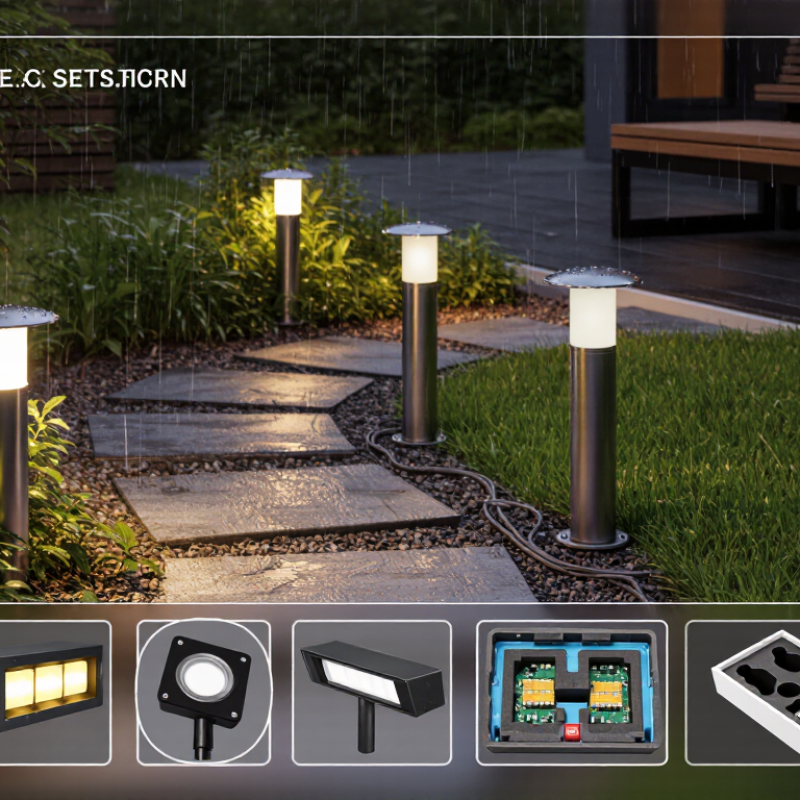
Smart LED garden lighting suits pathways, patios, planting beds, and entryways. Along a walkway, low-level lights can mark edges without shining directly into visitors’ eyes. On a patio, adjustable fixtures create softer light for dining or brighter light for cleaning. Subtle light matters. In planting beds, narrow-beam lamps can highlight a tree trunk or textured leaves while leaving darker areas for visual balance.
Useful features include scheduled on-and-off times, dimming, motion detection, and app or voice control. Schedules can follow local sunset times, reducing the need to reset timers as daylight changes. Motion sensors may brighten a side path when someone approaches, then lower the output after a set interval. Dimming also helps limit glare and avoids lighting every corner at full power.
Outdoor fixtures need suitable weather-resistant housings, secure cable connections, and light sources rated for garden use. Smart controls can add convenience, but they depend on a stable connection and compatible components. Still, automation is not magic. Dense foliage may block signals, and a sensor can react to passing pets or moving branches. Check these details on site, because a neat plan on paper can miss how a garden actually behaves.
How to Assess Chinese Smart LED Garden Light Manufacturers
A reliable assessment starts with the actual light, not a polished catalog. Ask the manufacturer for a sample matching the proposed production model. Check its housing, seals, cable entries, and finish after exposure to water and garden soil. Small gaps matter. Request test reports for the exact model, including ingress protection and electrical safety details, then confirm the report number with the issuing laboratory where possible. Compare the stated lumen output and beam angle with a measured sample; bright specifications can hide uneven paths or glare near seating areas.
Smart controls deserve hands-on testing. Pair the light with the intended app or gateway, then test schedules, dimming, signal range, and recovery after a power cut. Ask which wireless protocols are supported and whether software updates remain available after purchase. A responsive engineer should explain limits clearly, not promise universal compatibility. Review production checks, warranty terms, spare-part availability, and how defects are recorded. Request photos or video from a routine inspection, but treat these as supporting evidence, not a substitute for independent testing. One weakness in many factory reviews is relying on a single sample; repeat checks across a small batch before committing to volume.
Manufacturing Quality, Safety Standards, and Product Certifications
For buyers comparing smart LED garden lights, manufacturing quality begins with repeatable checks, not polished product photos. Inspect the aluminum housing for sharp edges, uneven coating, or gaps around the lens. Ask how workers verify cable connections and seals before final assembly. A loose connector may seem minor, yet moisture can turn it into a field failure. Small details matter.
Safety standards and certifications should match the destination market and product configuration. Request current test reports for the exact model, including its power supply and control components. Check that documents identify the testing body, tested standards, and product version. An IP rating describes resistance to dust and water under defined test conditions; it is not a promise of permanent outdoor protection. Reports help, but they do not prove every finished unit is flawless.
Tips: Ask for sample inspection records, temperature-test results, and clear warranty terms. Confirm that replacement parts are available. Keep records. If a supplier cannot explain how a certification applies to the chosen model, pause and ask for clarification. Even careful factories can miss defects, so independent pre-shipment inspection may be worthwhile for larger orders.
Buyer Considerations for Customization, Sourcing, and After-Sales Support
For a smart LED garden light, customization should begin with the site, not a catalog image. Ask for beam-angle options, color temperature, dimming behavior, and control compatibility. A narrow beam may highlight a path, while a wider optic suits planting beds. The U.S. Department of Energy reports that LEDs use at least 75% less energy and can last up to 25 times longer than incandescent lighting. That is a useful baseline, not a guarantee for every outdoor fixture. Heat, moisture, and driver quality still affect service life. Small details matter.
When sourcing, request a working sample and check its light output, seals, cable entry, and app or control response outdoors. IEA estimates lighting uses about 15% of global electricity, so efficiency claims deserve clear test conditions. Ask for test reports, rated power, ingress-protection details, production lead times, and minimum order quantities. A polished sample can still hide production variation; I would compare several units before approving a large order.
After-sales support should be agreed before payment. Confirm the warranty period, spare-driver availability, response times, and what evidence is needed for a fault claim. Keep installation instructions and batch details on file. Ask who pays for replacement shipping. This can be awkward, but it matters. A low quoted price is less useful if troubleshooting takes weeks or replacement parts are unavailable.