Leave Your Message
-
E-mail
-
Skype
-
Whatsapp
-
Wechat

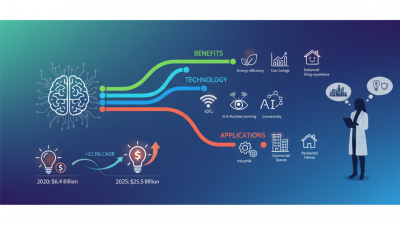
Smart Led Flood Light technology is moving beyond simple outdoor illumination. Connected controls now influence energy use, maintenance, security, and site visibility. MarketsandMarkets projects the global smart lighting market to grow from approximately USD 15.8 billion in 2024 to USD 40.2 billion by 2029. Its analysis identifies connectivity, automation, and energy management as major growth drivers.
The opportunity is practical. A warehouse entrance may need 12 hours of nightly lighting, while a residential driveway may require motion-based activation. Wireless control, daylight sensing, scheduling, and real-time fault alerts can reduce unnecessary operation. The U.S. Department of Energy reports that LED products use at least 75% less energy than incandescent lighting and can last up to 25 times longer. Actual results still depend on optics, temperatures, installation quality, and control settings.
This 2026 guide evaluates leading Smart Led Flood Light manufacturers through measurable criteria. These include lumen maintenance, beam distribution, color consistency, ingress protection, thermal design, warranty support, and platform compatibility. IES testing, LM-79 performance reports, LM-80 data, and recognized safety certifications strengthen product comparisons. Grand View Research also links smart lighting expansion with building automation and connected infrastructure, but market definitions vary between reports. That matters. No ranking is flawless. A strong specification sheet cannot reveal glare at a loading bay or delayed app responses during rain. Practical testing remains essential. The manufacturers featured here are assessed for documented performance, engineering experience, supply reliability, and long-term service capability. This approach helps buyers compare promising products without confusing novelty with dependable field performance.
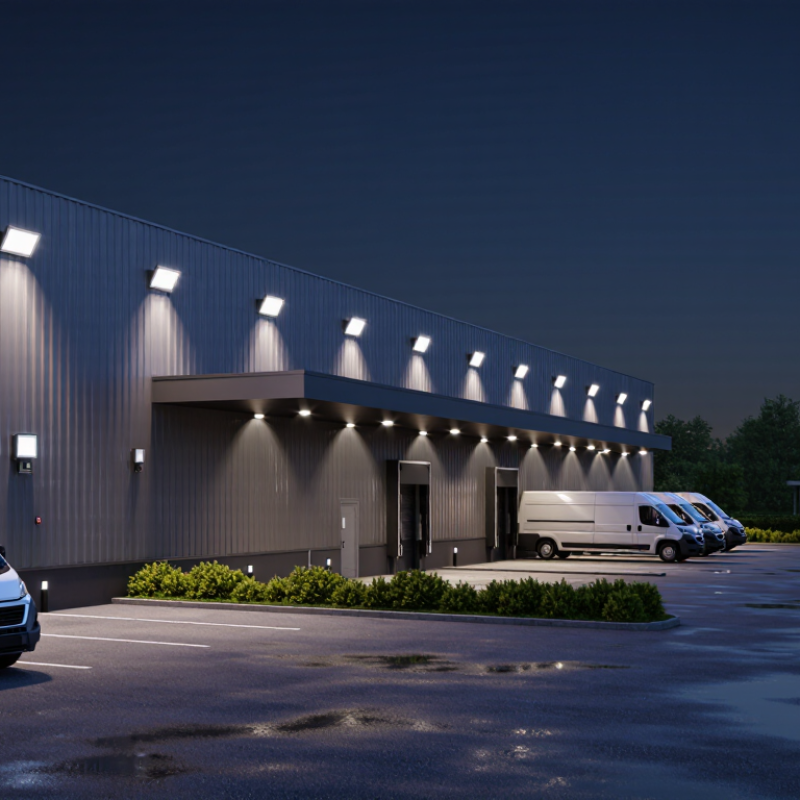
Smart LED flood lights are high-output outdoor fixtures that combine LED illumination with digital control. Unlike conventional floodlights, they can adjust brightness, timing, and operation through sensors or network commands. A typical unit uses a sealed housing, optical lens, LED board, driver, and control module. This structure matters in rain, dust, and temperature changes. Installation experience shows that beam angle is often overlooked. A narrow beam highlights gates, while a wide beam covers loading areas or building walls. Good selection begins with the lighting task, not advertised wattage.
Core technology starts with high-efficiency LED chips and a constant-current driver. The driver limits electrical stress and helps maintain stable output. Dimming may use pulse-width modulation or digital current control. Both methods can work well, but poor tuning may create visible flicker. Motion, daylight, and temperature sensors add context to the fixture’s decisions. Wireless protocols can support remote schedules, fault alerts, and grouped control. Local buttons or manual overrides remain valuable when connectivity fails. No sensor setup is perfect. Reflections from wet pavement can trigger unwanted activation.
Reliable models should document ingress protection, operating temperature, surge resistance, and photometric performance. These details help buyers compare products fairly and verify claims. In professional assessments, I check illumination at ground level, response time, and heat around the driver. Energy savings also depend on settings. A light running at full power all night may defeat its smart design. Maintenance deserves attention too: clean the lens, inspect seals, and review control logs. Some specifications remain incomplete, so measured performance should guide the final decision.
Technical comparison framework for evaluating smart LED flood light manufacturers and products
| Data Dimension | Technical Specification or Definition | Common Industry Range or Requirement | Why It Matters in Product Evaluation |
|---|---|---|---|
| Product Definition | A smart LED flood light is an outdoor or industrial LED luminaire that provides broad-area illumination and includes digital control, sensing, communication, or automation functions. | LED light source + electronic driver + optical system + smart control capability | Separates connected flood lights from conventional LED flood lights that operate only through a manual switch or timer. |
| Typical Rated Power | The electrical input power consumed by the luminaire during normal operation. | 10–30 W for compact security lighting; 50–300 W for commercial areas; 300 W and above for sports or large-area applications | Helps match the product to the required illumination area while supporting energy and electrical-load calculations. |
| Luminous Efficacy | The amount of visible light produced per watt of electrical power consumed by the complete luminaire. | Typically about 100–180 lm/W for modern outdoor LED luminaires | Higher luminaire efficacy can reduce energy consumption, but it should be assessed together with optical distribution, glare, and color quality. |
| Luminous Flux | The total visible light output of the luminaire, measured in lumens. | Approximately 1,000–50,000+ lm depending on power, optics, and application | Provides a basic indication of total light output, although illuminance at the target surface is more important for final design. |
| Color Temperature | Correlated color temperature (CCT) describes whether the white light appears warm, neutral, or cool. | 2,700–3,000 K warm white; 4,000 K neutral white; 5,000–6,500 K cool white | Influences visual comfort, appearance, nighttime visibility, and the suitability of the light for residential, commercial, or security use. |
| Color Rendering Index | CRI indicates how accurately a light source reveals the colors of illuminated objects compared with a reference source. | CRI ≥70 is common for general outdoor lighting; CRI ≥80 is preferred where color recognition is important | Higher color rendering can improve visibility of people, vehicles, signs, and security-camera scenes. |
| Beam Angle and Optics | The optical distribution determines how light is spread across the target area. | Narrow, medium, wide, asymmetric, and area-light distributions are commonly available | Correct optics reduce dark spots, excessive spill light, glare, and the number of fixtures required. |
| Dimming Capability | Dimming adjusts LED output and power consumption according to schedules, sensor input, or external commands. | Common methods include PWM, 0–10 V, DALI, and digitally controlled driver interfaces | Dimming supports adaptive lighting, energy savings, reduced glare, and different operating modes. |
| Motion Detection | A sensor detects movement and triggers a lighting response such as dimming up, full output, or timed operation. | Microwave, passive infrared (PIR), and combined sensor technologies | Useful for security lighting, pedestrian areas, warehouses, and sites that do not require full output continuously. |
| Daylight Sensing | A photocell or ambient-light sensor measures surrounding light and enables dusk-to-dawn or daylight-harvesting control. | Automatic on/off operation or continuous output adjustment | Prevents unnecessary daytime operation and improves consistency in outdoor lighting schedules. |
| Wireless Connectivity | Wireless communication allows remote configuration, monitoring, grouping, and control of one or more luminaires. | Bluetooth mesh, Wi-Fi, Zigbee, cellular, sub-GHz RF, or proprietary wireless protocols | Protocol selection affects range, network scalability, commissioning time, interoperability, and operating cost. |
| Wired Control Interfaces | Wired interfaces transmit dimming, status, and control signals between the luminaire and a control system. | 0–10 V, DALI-2, relay switching, and other building or lighting-control interfaces | Wired control can provide stable communication in environments with radio interference or strict infrastructure requirements. |
| Gateway and Cloud Functions | A gateway connects local luminaires to a management platform, while cloud software can provide dashboards, alerts, schedules, and reporting. | Optional for small installations; increasingly used for multi-site commercial and municipal projects | Enables centralized management, remote diagnostics, energy reporting, and firmware administration. |
| Cybersecurity | Security measures protect device access, communication, stored credentials, and software updates. | Encrypted communication, authenticated access, unique credentials, secure firmware updates, and role-based permissions | Connected lighting can become part of an organization’s operational technology network and should be evaluated as an IoT device. |
| Ingress Protection | IP rating indicates protection against dust and water ingress under defined test conditions. | IP65 protects against dust and water jets; IP66 provides stronger water-jet protection; IP67 includes temporary immersion protection | Outdoor flood lights require an enclosure rating appropriate for rain, dust, cleaning, and installation location. |
| Impact Protection | IK rating indicates resistance of the enclosure to mechanical impact. | IK08, IK09, and IK10 are common levels for demanding commercial or public environments | Higher impact resistance helps protect the luminaire from vandalism, accidental contact, and maintenance activity. |
| Operating Temperature | The ambient temperature range in which the luminaire is designed to operate safely and maintain performance. | Often approximately −40°C to +50°C, depending on driver, housing, and control components | Temperature capability is important for cold climates, hot rooftops, enclosed mounting locations, and industrial sites. |
| Thermal Management | Heat sinks and housing structures transfer heat away from LEDs and electronic components. | Die-cast aluminum housings, finned heat sinks, and thermally optimized LED boards are widely used | Lower operating temperature generally supports longer component life and more stable light output. |
| LED Lifetime | LED lifetime is commonly expressed using the L70 method, which estimates the time until light output reaches 70% of the initial value. | Many quality outdoor products specify approximately 50,000–100,000 hours at defined operating conditions | Lifetime claims should be reviewed with the test temperature, driver life, lumen-maintenance data, and warranty terms. |
| Power Factor | Power factor reflects how effectively the luminaire draws electrical power from the supply. | A power factor of 0.90 or higher is commonly preferred for commercial installations | Higher power factor can reduce reactive-current effects and support better electrical-system performance. |
| Total Harmonic Distortion | THD measures waveform distortion introduced by the electronic driver. | Lower THD is preferred; project requirements often specify a maximum value such as 20% | Low distortion helps maintain power quality, particularly when many luminaires share the same electrical system. |
| Surge Protection | Surge protection limits transient voltage caused by lightning activity or switching events. | Common product ratings include 4 kV, 6 kV, 10 kV, or higher, depending on the protection arrangement | Outdoor installations should consider both line-to-line and line-to-earth surge exposure and the site’s grounding design. |
| Input Voltage | The AC or DC voltage range accepted by the luminaire’s driver. | Common AC ranges include 100–277 V, 120–277 V, or 220–240 V; universal-input models may support wider ranges | Correct voltage compatibility avoids driver failure and simplifies deployment across different electrical networks. |
| Emergency and Fail-Safe Behavior | The programmed response when communication, sensor, gateway, or mains power conditions change. | Local fallback schedules, last-state operation, default dimming levels, and optional emergency-lighting integration | Ensures predictable operation even when the wireless network or cloud service is temporarily unavailable. |
| Installation Adjustability | Mounting brackets and trunnions allow the aiming angle and mounting position to be adjusted. | Adjustable brackets, slip-fitter mounts, wall mounts, pole mounts, and junction-box configurations | Flexible mounting simplifies aiming, improves uniformity, and reduces installation changes. |
| Control Scenarios | Smart flood lights can combine schedules, occupancy detection, daylight sensing, remote commands, and preset scenes. | Typical scenes include security, nighttime dimming, event, maintenance, and energy-saving modes | Multiple control scenarios allow lighting output to follow actual site activity instead of operating at full power continuously. |
| Energy-Saving Potential | Energy reduction depends on LED efficacy, dimming levels, operating hours, occupancy, and control strategy. | Actual savings must be calculated from the project baseline; connected controls do not guarantee a fixed percentage | Manufacturers should provide transparent assumptions, operating profiles, and measured or calculated energy data. |
| Compliance Documentation | Documentation may include electrical safety, electromagnetic compatibility, photobiological safety, environmental, and radio approvals. | Common references include IEC/EN 60598-1, IEC/EN 60598-2-5, IEC 62471, EMC requirements, and applicable regional certifications | Verified documentation supports legal market access, safer installation, and smoother project approval. |
| Warranty and Serviceability | Warranty coverage, spare parts, driver replacement, firmware support, and technical assistance affect total ownership cost. | Commercial warranties commonly range from 3–7 years, subject to product and project conditions | A longer warranty is valuable only when supported by clear exclusions, replacement procedures, and accessible service resources. |
| Recommended Applications | Smart LED flood lights are used where broad-area illumination and adaptive control are needed. | Building façades, loading areas, parking lots, sports facilities, warehouses, yards, public spaces, and security zones | Application-specific optical design and control logic are more important than maximum wattage alone. |
| Key Manufacturer Evaluation Criteria | Evaluate photometric files, test reports, driver data, control interoperability, cybersecurity, installation support, and lifecycle service. | Prioritize verified performance data over nominal lumen or lifetime claims | A structured evaluation reduces project risk and helps compare products without relying on brand recognition alone. |
Note: Performance ranges are general industry references. Actual values depend on luminaire design, test conditions, installation environment, control settings, and applicable regional standards.