Top 10 Luminaire Controllers in China You Should Know About?
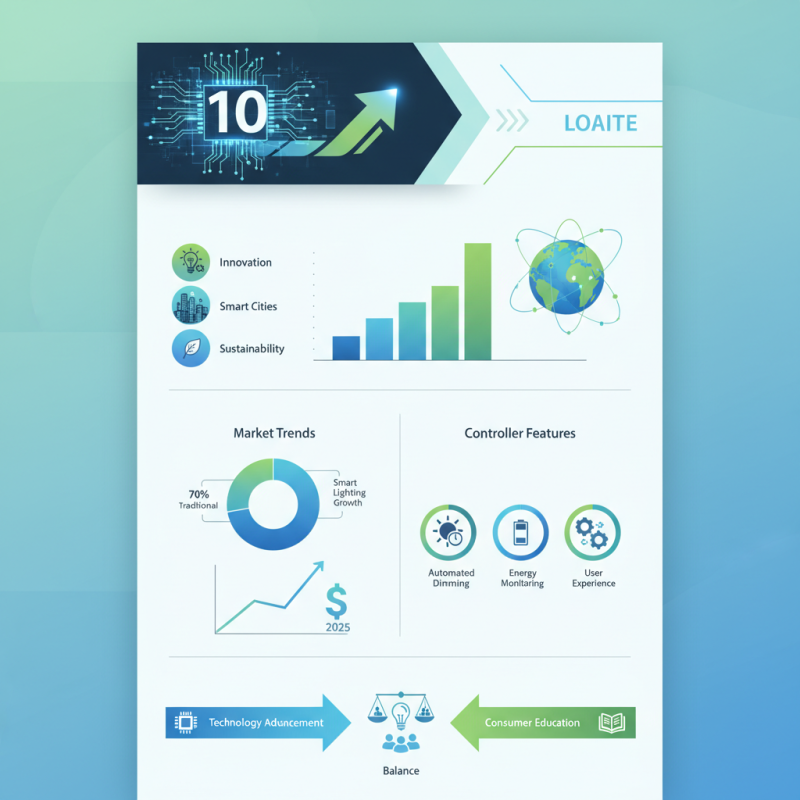
In recent years, the demand for efficient lighting solutions has spurred innovation in the industry. The Luminaire Controller is at the forefront of this change. It plays a crucial role in managing energy consumption and improving user experience. According to a recent market report by the Lighting Research Center, the global smart lighting market is projected to reach $30 billion by 2025. This growth highlights the increasing reliance on intelligent systems like luminaire controllers.
China, as a manufacturing powerhouse, is leading the way in developing sophisticated luminaire controller technologies. With the country's push for smart cities, these controllers become indispensable. They offer features such as automated dimming and real-time energy monitoring. However, despite these advancements, the market faces challenges. Many consumers remain unaware of the benefits of these systems. This gap presents an opportunity for industry players to educate audiences on their advantages.
Understanding the top luminaire controllers in China can help consumers make informed choices. The market is saturated but offers potential gems. Focusing on user needs and sustainability is crucial. Innovation should be accompanied by awareness and education. Balancing technology with user engagement creates a promising future for luminaire controllers.
Overview of Luminaire Controllers in China
In recent years, the luminaire controller market in China has seen significant growth. A report from Qianzhan Industry Research Institute highlights that the market size reached approximately $1.5 billion in 2022. This reflects a compound annual growth rate of 12.3% from 2018. As urbanization accelerates, the demand for intelligent lighting solutions increases. Cities are emphasizing energy efficiency and automation.
Many luminaire controllers now integrate smart technology. They allow users to remotely manage and monitor lighting systems. This feature can lead to energy savings of 30% or more, according to some studies. However, the industry faces challenges. The compatibility of different systems can be problematic. Users may find technology integration complex. This situation can lead to dissatisfaction among customers.
The demand for user-friendly designs is crucial. A recent survey showed that 65% of users prefer simple interfaces. They seek ease of use. Companies should focus on this aspect. Some emerging technologies show promise, like adaptive lighting systems. However, many solutions remain under-researched. As the market evolves, continuous improvements are necessary to meet consumer expectations.
Key Features to Look for in Luminaire Controllers
When choosing luminaire controllers, it's crucial to consider their key features. One important aspect is ease of installation. A controller that is simple to set up can save time and reduce labor costs. Look for user-friendly interfaces that require minimal training. Wireless connectivity options are also beneficial. They provide flexibility and ease of use, especially in complex lighting setups.
Another essential feature is the ability to dim lights effectively. Dimming enhances mood and energy efficiency. Controllers should offer smooth dimming capabilities without flickering. Moreover, compatibility with various lighting types is vital. Controllers must work well with LEDs, fluorescent, and incandescent lights. This versatility ensures that users can adapt their systems as needed.
Additionally, consider the level of automation available. Advanced controllers can integrate with smart home systems. This feature allows for scheduling and remote access. Users benefit from customized lighting experiences. However, not all devices may support this. Careful research is necessary to avoid mismatches. You might find some controllers lacking in essential features on your checklist. Balancing technology and simplicity can sometimes feel overwhelming.
Top 10 Luminaire Controllers in China You Should Know About
| Controller Type |
Key Features |
Compatibility |
Control Method |
Max Load |
| DALI Controller |
Dynamic Addressing, Energy Monitoring |
DALI Compatible Fixtures |
Digital |
100W |
| 0-10V Controller |
Simple Dimming, No Flickering |
Compatible with 0-10V Fixtures |
Analog |
150W |
| Triac Dimmer |
Phase-cut Dimming, Easy Installation |
Incandescent and LED |
Analog |
200W |
| Zigbee Controller |
Wireless Control, Automation |
Zigbee Compatible Devices |
Wireless |
100W |
| KNX Controller |
Versatile Control, Integration with HVAC |
KNX Based Systems |
Digital |
250W |
| RF Controller |
Remote Control, Easy Setup |
RF Compatible Fixtures |
Wireless |
80W |
| Smart Wi-Fi Controller |
App Control, Voice Assistant Integration |
Wi-Fi Enabled Devices |
Wireless |
150W |
| Ethernet Based Controller |
High-Speed Networking, Centralized Management |
LAN Based Protocols |
Wired |
500W |
| Modbus Controller |
Reliable Communication, Multi-Device Support |
Modbus Compatible Systems |
Wired |
300W |
Top Brands of Luminaire Controllers Available in China
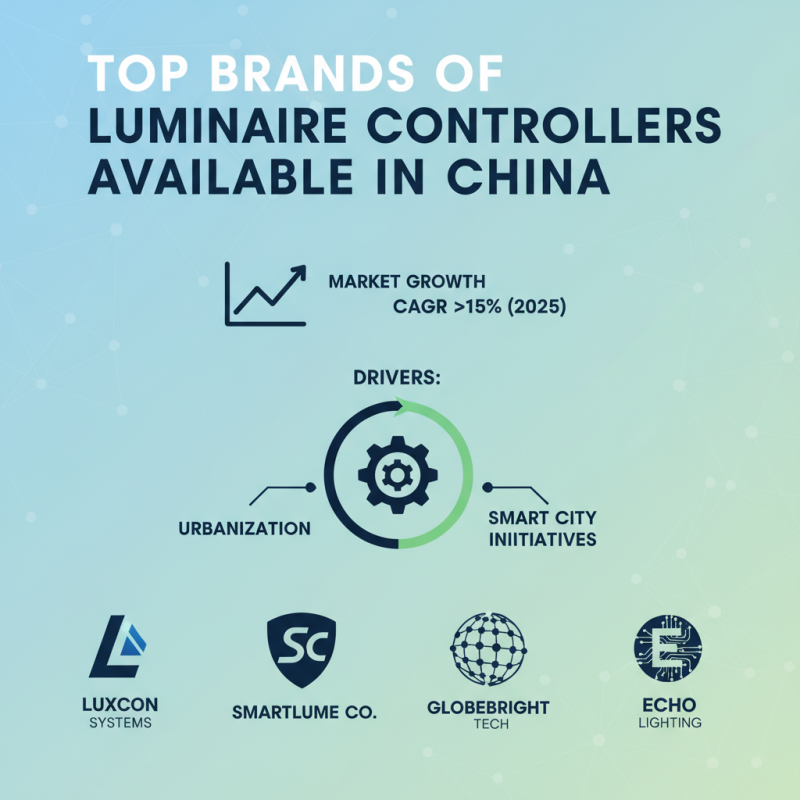
The luminaire controller market in China has seen significant growth. As cities evolve, so does the demand for efficient lighting solutions. Reports indicate that the market is expected to grow at a compound annual growth rate (CAGR) of over 15% through 2025. This boom is driven by urbanization and smart city initiatives.
Several top brands lead the luminaire controller sector. These brands focus on innovation and energy efficiency. They offer advanced functionalities like dimming, color changing, and remote management. In a recent survey, 68% of users noted increased energy savings after switching to smart controllers. However, not all products meet the high standards. Challenges include interoperability issues and inconsistent performance.
While many brands claim superior quality, consumer feedback often highlights areas for improvement. For instance, ease of use remains a concern; 42% of users report difficulties with setup. Moreover, technical support is a crucial factor. Many customers expressed dissatisfaction with after-sales services. This feedback signifies a need for brands to refine both product and service quality.
Comparison of Luminaire Controller Technologies
The advancement of luminaire controller technologies in China is impressive. These controllers manage lighting systems effectively and adapt to varying environments. Many technologies employ smart sensors for automated control. These sensors optimize energy use and enhance user convenience. However, integrating these systems can pose challenges.
Wireless communication is popular among many modern controllers, allowing seamless connectivity and remote operation. However, interference can occur in crowded urban areas. Additionally, not all systems offer the same level of reliability. Some users report connectivity issues intermittently. This inconsistency can be frustrating and requires attention.
Dimming and color tuning features are valuable; they can enhance mood and ambiance in a space. Yet, not all controllers achieve smooth transitions. Some users experience flickering, which disrupts the intended effect. Moreover, installation complexity varies by technology. Certain systems demand more expertise, which can lead to costly mistakes. Exploring user feedback is crucial for making informed choices.
Future Trends in Luminaire Controller Development in China
As the demand for smart lighting solutions grows in China, luminaire controllers are evolving rapidly. The market for these controllers is projected to expand at a rate of 12% annually, reaching $1.5 billion by 2025. Key trends signify a shift toward increased energy efficiency and user-friendly interfaces. The integration of IoT technologies into luminaire controllers is on the rise. This shift not only makes energy management easier, but also enhances remote control capabilities.
Tips: Embrace smart technology. Assess your current lighting needs. Long-term savings await.
Another significant trend is the focus on data analytics. Many controllers can now gather usage data. This data provides insights into user behavior and energy consumption. These insights can guide future lighting solutions, making them more efficient. However, many manufacturers struggle with data privacy issues. This can hinder user trust and adoption.
Tips: Keep user data secure. Transparency builds trust. Monitor industry standards.