Best Motion Sensor Street Light Project Ideas for Smart Cities?
In the realm of urban development, the "Motion Sensor Street Light Project" stands out as a pivotal innovation for smart cities. Experts in this field, like Dr. Emily Tran, emphasize its critical role in enhancing urban safety. She once noted, "Intelligent street lighting reshapes our cities, making them safer and more energy-efficient."
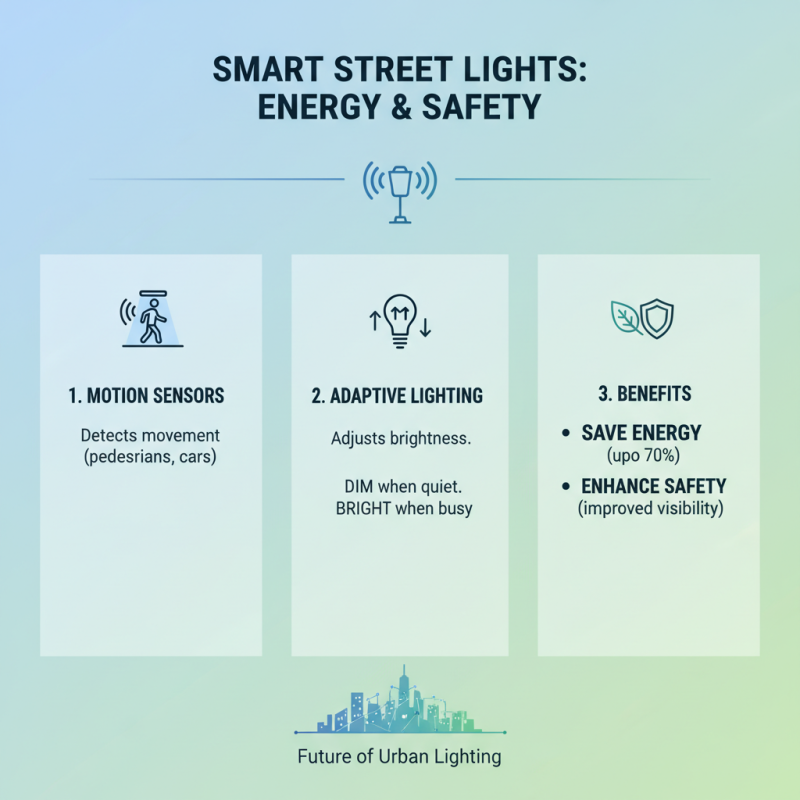
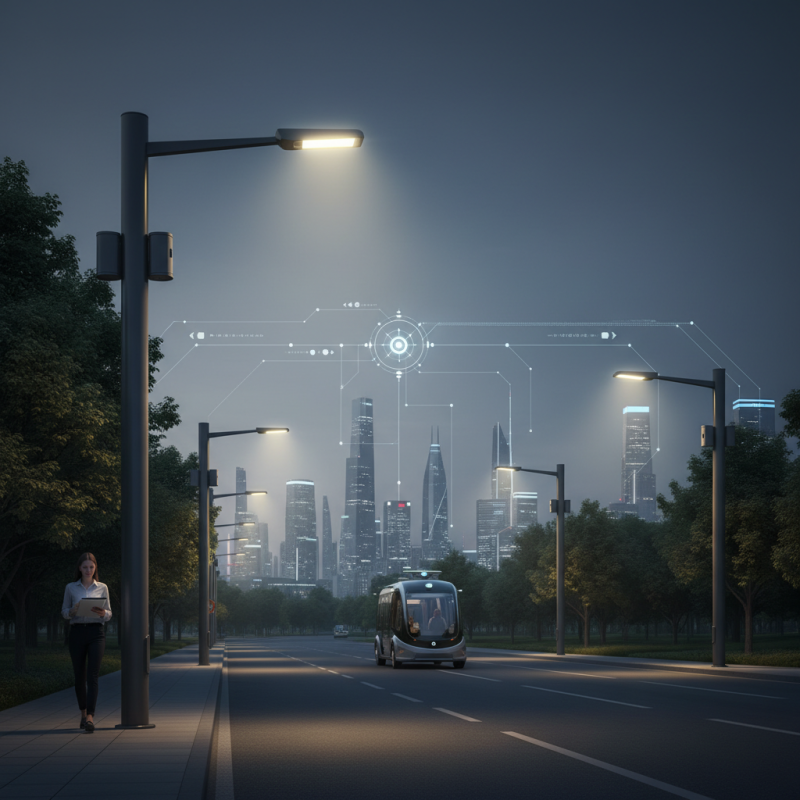
Motion sensor street lights offer practical solutions. They activate upon detecting movement, conserving energy when areas are unoccupied. This adaptability is crucial for cities aiming for sustainability. Furthermore, they connect with broader smart city networks, facilitating real-time monitoring and response.
However, implementing these projects is not without challenges. Cities must navigate funding, installation logistics, and technology integration. The balance between innovation and practicality is delicate. While the benefits are clear, thorough planning and execution are essential for true success. Reflecting on these factors can significantly enhance project outcomes.
Best Practices for Implementing Motion Sensor Street Lights in Urban Areas
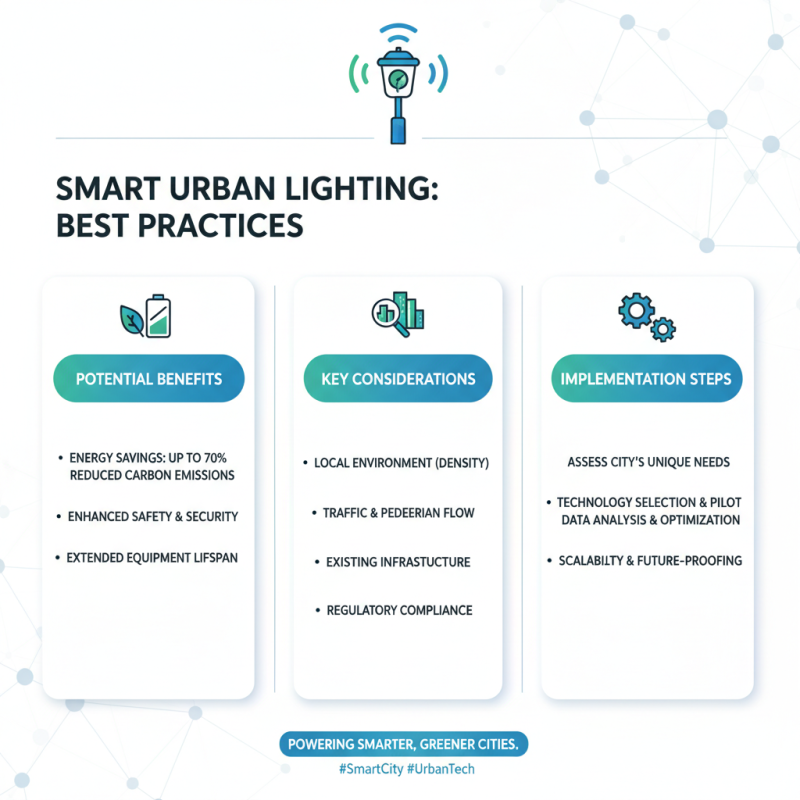
Motion sensor street lights are becoming an essential feature in smart urban planning. Implementing these systems requires careful consideration of local conditions. Research indicates that smart lighting can reduce energy consumption by up to 70%. Cities need to analyze their unique environments before proceeding. For example, dense urban areas might require different designs compared to suburban locations.
Communication between sensors and central systems is crucial. A recent report suggested that reliable data transmission can enhance system efficiency by 30%. However, challenges exist. For instance, sensors may underperform in extreme weather conditions. Authorities must identify potential obstacles and devise solutions to address them. Testing in various conditions ensures that the technology is dependable.
Community engagement is vital in the planning phase. Residents should be involved in discussions about installation locations and expected benefits. Surveys reveal that 65% of residents feel safer with well-lit streets. However, concerns about privacy and light pollution must be addressed. Balancing safety and community concerns is key to achieving effective implementation.
Innovative Designs for Motion Sensor Street Lights to Enhance Safety
Motion sensor street lights are essential in smart city designs. They enhance safety by providing light only when it is needed. A recent study indicates that using these lights can reduce energy consumption by up to 50%. This not only saves costs but also contributes to environmental sustainability.
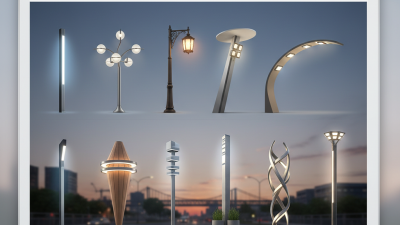
The design of these lights can vary. Some utilize LED technology for efficiency, while others incorporate solar panels for energy independence. Data from the International Energy Agency shows that cities can optimize their lighting infrastructure with smart designs. Key features can include adjustable brightness and integration with urban security systems. However, the implementation of these technologies can face challenges. For instance, the initial investment cost can be high.
Effective placement of motion sensor lights is critical for maximizing their benefits. Urban planners need to consider visibility and coverage areas. Some lights may not cover enough ground, leaving dark spots. Regular assessments and community feedback are vital. This ensures these safety measures meet the needs of all citizens while adapting to urban growth and changes.
Best Motion Sensor Street Light Project Ideas for Smart Cities
| Project Name |
Location |
Technology Used |
Features |
Impact |
| Eco Street Lights |
City Park, San Francisco |
Solar Powered, LED |
Dusk-dawn sensors, Motion detection |
Increased safety and energy savings |
| Smart Spacing Lights |
Downtown, Austin |
Wireless Control, AI |
Adaptive brightness, Incident detection |
Reduced crime rates and improved pedestrian safety |
| Smart Transit Street Lights |
Public Transport Hubs, New York |
IoT Sensors, Renewable Energy |
Real-time data, Emergency alerts |
Enhanced user experience and improved safety at transit points |
| Green Corridor Lights |
Streetscape, Seattle |
Energy-efficient LEDs, Motion detection |
Integration with traffic systems, Eco-friendly |
Improved air quality and traffic safety |
| Interactive Community Lights |
Community Centers, Chicago |
Smart sensors, User engagement apps |
Community feedback, Event notifications |
Fostering community involvement and awareness |
Cost Analysis and Budgeting for Motion Sensor Street Light Projects
Implementing motion sensor street light projects is an innovative approach for smart cities. Cost analysis plays a crucial role in understanding their feasibility. According to a 2022 report by the International Energy Agency (IEA), cities can save up to 60% on energy costs by using such lighting systems. Initial installation may require substantial investment, ranging from $10,000 to $15,000 per light. This cost includes the sensors, lights, and necessary infrastructure.
However, it’s essential to factor in maintenance and operational costs. Sensors require occasional updates and checks to function effectively. The lifespan of LED lights averages about 25,000 hours. The longer lifespan reduces replacement frequency, which can help balance costs over time.
Tips: When planning, consider a phased rollout. Start with high-traffic areas to maximize impact. Collaborate with local communities for feedback and support. Monitoring city-specific energy consumption data can further validate the effectiveness of these projects. The investment upfront is significant, yet the long-term savings and environmental benefits make it worthwhile. Cities should not overlook these aspects. Failing to evaluate these variables can lead to unforeseen financial strain.
Cost Analysis of Motion Sensor Street Light Projects in Smart Cities
Case Studies of Successful Motion Sensor Street Light Initiatives in Cities
Cities worldwide are implementing motion sensor street lights to enhance urban sustainability. These systems use smart technology to detect movement. According to a report by MarketsandMarkets, the smart street lighting market is projected to reach $8.3 billion by 2025, indicating a rising trend.
Case studies from several cities illustrate the benefits of these initiatives. For instance,
Los Angeles installed over 140,000 LED street lights equipped with motion sensors. This project led to a 63% reduction in energy consumption. However, some residents reported concerns about lights activating at odd hours, causing inconvenience. This highlights the need for better calibration and feedback systems.
In Barcelona, smart street lights improved public safety and reduced crime rates. Data shows a 30% drop in incidents in monitored areas. Yet, challenges remain. Street light placement and sensitivity levels must be adjusted to avoid unnecessary activations. This reflection sheds light on the ongoing journey cities face in integrating technology effectively.