2026 How to Choose the Right Led Bulb for Your Home Lighting Needs?
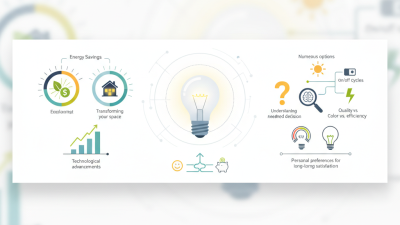
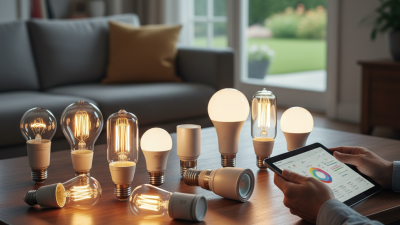
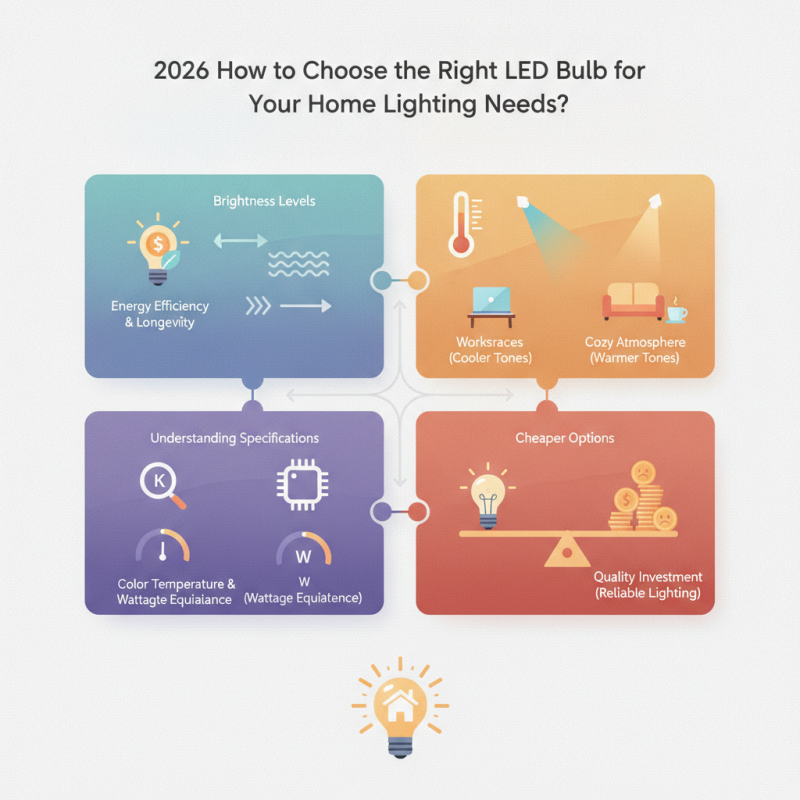
Choosing the right LED bulb for your home lighting needs can be a daunting task. With so many options available, it’s essential to consider several factors. LED bulbs offer energy efficiency, longevity, and brightness levels that can transform any space. However, not all LED bulbs are created equal.
Many people overlook important details like color temperature and wattage equivalence. A bulb’s light output can significantly impact your mood and productivity. For example, cooler temperatures are ideal for workspaces, while warmer tones create a cozy atmosphere. Understanding the specifications of each LED bulb is crucial.
It’s also easy to fall into the trap of price versus quality. Cheaper options may save money initially but could lead to dissatisfaction. They might flicker, fail prematurely, or not provide the right light. Investing in quality LED bulbs can pay off in the long run, ensuring you have reliable lighting that enhances your home’s atmosphere. Take the time to choose wisely; your space deserves it.
Choosing the Right LED Bulb: Understanding Watts vs. Lumens
When choosing the right LED bulb, understanding watts versus lumens is crucial. Watts measure power consumption, while lumens measure light output. Many consumers equate higher wattage with brighter light, but this is a common misconception. For instance, a traditional 60-watt bulb generates about 800 lumens. In contrast, an LED bulb only uses around 8-12 watts to achieve the same brightness. This efficiency translates to significant energy savings, up to 80%, according to the Department of Energy's recent studies.
Selecting the right lumens depends on your specific lighting needs. A living room may require around 1,500 lumens for adequate brightness, while a bedroom could be comfortable with just 800-1,200 lumens. Additionally, the color temperature plays a role. Warmer light (2700K-3000K) creates a cozy atmosphere, while cooler light (4000K-5000K) enhances focus. Reflect on these details to ensure your space is well-lit and inviting.
It’s also important to consider the bulb’s lifespan. Most LED bulbs last over 25,000 hours, significantly reducing replacement frequency. However, some users report dissatisfaction with LED light quality, often feeling too harsh. Testing various options in your home environment is advisable. This trial and error can help you find the perfect balance between efficiency and ambiance.
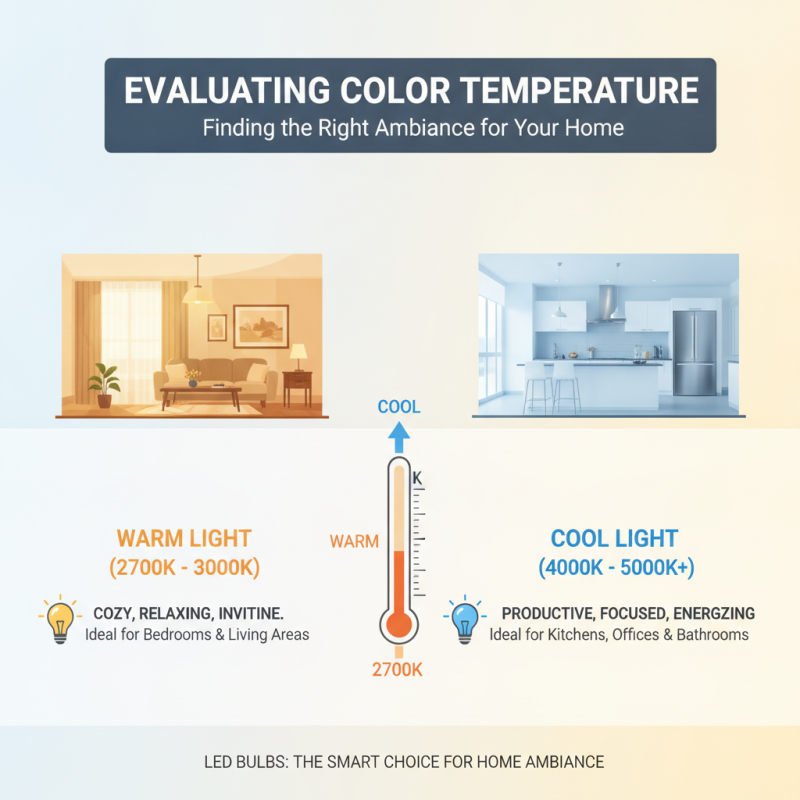
Evaluating Color Temperature: Finding the Right Ambiance for Your Home
Color temperature plays a critical role in creating the right ambiance for your home. It influences how we perceive space and interacts with our emotions. Measured in kelvins (K), color temperature can range from warm yellow tones to cool blue hues. Understanding these temperatures helps in selecting the perfect LED bulbs.
Warm light, around 2700K to 3000K, feels cozy and inviting. It’s ideal for living rooms and bedrooms. This soft illumination is perfect for relaxation. In contrast, cool white light, ranging from 3500K to 4100K, promotes alertness. Such lighting is great for kitchens and home offices, where focus is essential.
When evaluating options, consider how you want each space to feel. Bright whites help enhance visual clarity, while warmer tones encourage comfort. It’s also valuable to reflect on how your choices impact daily life. Experimenting with different temperatures can lead to unexpected results, sometimes requiring thoughtful adjustments. Take your time to observe how different lighting affects mood and functionality in your home.
Comparing Lifespan and Efficiency: How Long Do LED Bulbs Last?
When selecting LED bulbs for your home, lifespan and efficiency are crucial factors. LED bulbs typically last between 15,000 to 50,000 hours. In contrast, incandescent bulbs last only about 1,000 hours. This significant difference highlights the longevity of LEDs. Many consumers may overlook this when making a choice.
In terms of efficiency, LEDs use about 75% less energy than traditional bulbs. A report from the U.S. Department of Energy states that switching to LED lighting could save households up to $225 a year on electricity bills. However, the upfront cost of LED bulbs may deter some buyers. They often see a higher price compared to incandescent options. Yet, understanding the long-term savings can shift that perspective.
Moreover, the quality of light emitted by LEDs varies widely. Some may produce a harsh glare, while others offer a warm glow. This inconsistency can lead to dissatisfaction if one chooses based purely on price. Consumer feedback indicates that not all LEDs deliver the expected performance. Thus, researching and comparing products ensures a smart choice. Balancing cost, lifespan, and light quality creates better lighting for your home.
2026 How to Choose the Right Led Bulb for Your Home Lighting Needs? - Comparing Lifespan and Efficiency: How Long Do LED Bulbs Last?
| Type of LED Bulb |
Lifespan (Hours) |
Efficiency (Lumens/Watt) |
Color Temperature (K) |
Energy Consumption (Watts) |
| A19 |
15,000 |
80 |
2700 |
10 |
| BR30 |
25,000 |
70 |
3000 |
11 |
| PAR Spot |
20,000 |
75 |
4000 |
12 |
| Candelabra |
15,000 |
90 |
2200 |
6 |
| T8 Tube |
30,000 |
100 |
5000 |
18 |
Assessing Dimming Capabilities: Compatibility with Existing Fixtures
When assessing dimming capabilities of LED bulbs, compatibility with your existing fixtures is crucial. Not every bulb works seamlessly with dimmers. Certain LEDs may flicker or hum when used with older dimming technology. Always check the wattage and type of your dimmer switch. This small step can save you frustration later.
Consider testing an LED bulb before making a larger investment. Purchase a single bulb and install it in your fixture. Observe how it performs when dimmed. Does it maintain a consistent brightness? Or does it fade unevenly? These details matter. They can affect the ambiance of your home drastically.
If you encounter issues, it may reveal deeper compatibility problems. Some fixtures require specific types of bulbs. If necessary, upgrade your dimmer switch to one designed for LED use. This ensures a more stable performance. Don’t overlook the importance of reading reviews on compatibility. User experiences can help you navigate this complex landscape.
Assessing Dimming Capabilities of LED Bulbs
Understanding Energy Ratings: Cost Savings and Environmental Impact
When selecting LED bulbs for your home, understanding energy ratings is crucial. These ratings provide insights into energy efficiency and potential cost savings. A higher energy rating often indicates lower electricity consumption. For example, a bulb with an A++ rating can save you more than a bulb rated C over time.
Cost savings aren't the only concern. Environmental impact plays a significant role too. Efficient LED bulbs reduce greenhouse gas emissions. Every LED bulb replaces older incandescent bulbs, which consume much more energy. However, you might encounter higher initial costs that could be off-putting. Reflecting on your lighting needs can help justify this upfront investment.
Choosing the right LED bulb requires balance. Examine the energy rating before making a purchase. The most efficient option may not always be the best fit for your space. Sometimes, you might be tempted to choose a low-rated bulb for immediate savings. This short-term mindset could lead to higher bills later. Aim for long-term benefits by focusing on both cost and environmental impacts.