10 Essential Tips for Choosing the Right Street Light Control Panel?
Choosing the right Street Light Control Panel is crucial for effective urban planning. Reports show that efficient street lighting can reduce energy consumption by up to 30%. This not only saves costs but also contributes to environmental sustainability. Poor lighting impacts safety and visibility in public spaces.
Municipalities must evaluate various factors when selecting a control panel. A poorly chosen system can lead to increased maintenance costs. Data from industry experts suggests that many cities face challenges with outdated technology. These issues delay effective city management and street safety improvements.
Moreover, the integration of smart technology into street lighting is on the rise. As cities become smarter, so should their lighting solutions. However, not all solutions are suited for every city. Balancing functionality and cost-effectiveness remains a pressing need for urban administrators. In this context, understanding the nuances of Street Light Control Panels is essential.
Understanding the Purpose and Functionality of Street Light Control Panels
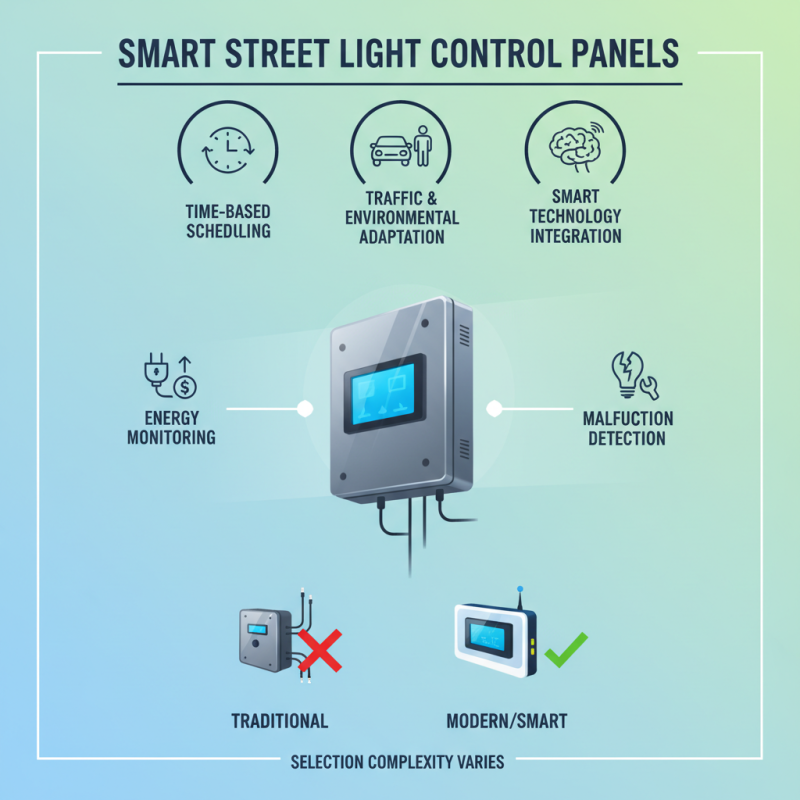
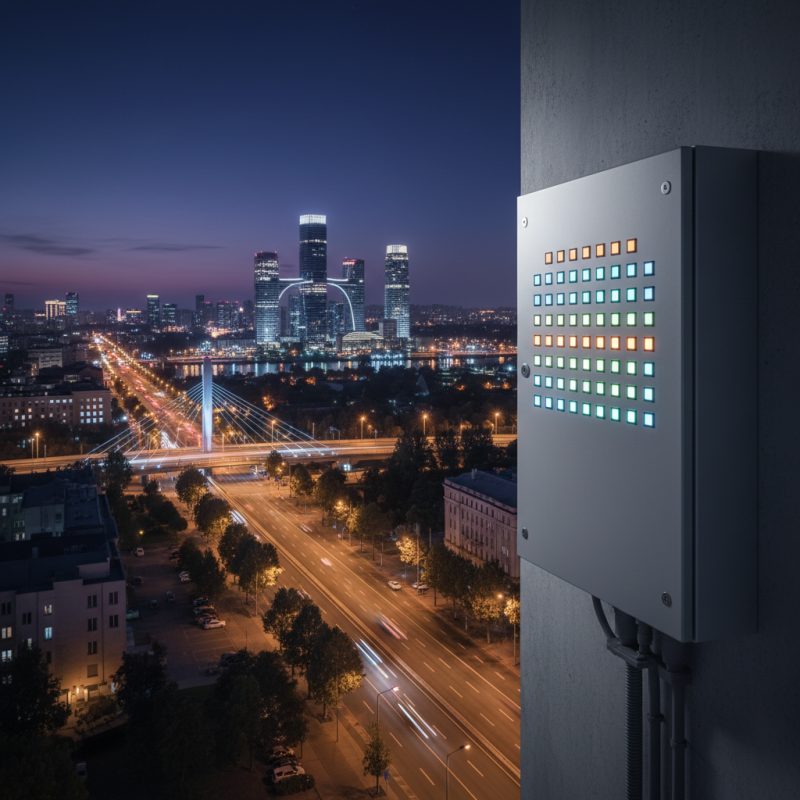
Street light control panels play a crucial role in managing public lighting systems. They regulate when lights turn on and off, adjusting to traffic and environmental conditions. With the rise of smart technology, their functionality has expanded significantly. These panels can now monitor energy usage and detect malfunctions in the lighting. However, not all control panels are built the same, which can complicate selection.
Choosing the right panel requires understanding specific needs. Each community has different lighting requirements based on safety, aesthetics, and energy efficiency. It's essential to assess the environment—urban areas may need more durable panels than rural ones. Difficulties arise if panels can't adapt to changing technologies. Features like remote monitoring might seem appealing but can add complexity. Ensure compatibility with existing systems to avoid future headaches.
Moreover, users often overlook installation requirements. Some panels can demand extensive modifications to existing infrastructures. This can lead to significant delays and unexpected costs. It's worth considering maintenance, too. An advanced panel might offer great features but may be tricky to service. Balancing functionality with ease of use is key. Make choices that serve the community's needs, while not losing sight of practical considerations.
Evaluating Different Types of Control Panels for Street Lighting Systems
When evaluating different types of control panels for street lighting systems, it's essential to understand your specific needs. Some control panels feature basic functionalities, while others offer advanced options, like remote monitoring. Consider how often you'll need to adjust settings. Frequent changes might point you toward a more intricate system.
There are various technologies used in control panels. For example, some utilize digital interfaces, while others stick to analog. Digital panels may provide more features, but they can complicate maintenance. Think about your team’s skill level—will they manage a high-tech system, or would a simpler option serve you better?
Installation can also vary greatly among panels. Some require extensive setup, while others can be installed quickly. Delays in installation can be frustrating. Make sure to factor in the learning curve associated with any new system. A seamless experience starts with choosing the right panel, so take the time to evaluate your options carefully.
Top Factors for Choosing Street Light Control Panels
Key Features to Look for in a Quality Street Light Control Panel
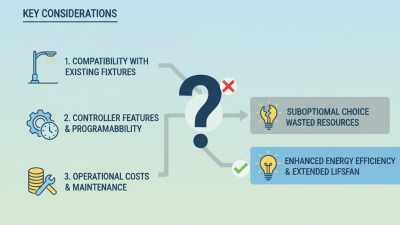
When selecting a street light control panel, consider key features that ensure efficiency and durability. Start by evaluating the panel's compatibility with existing lighting systems. It is crucial for seamless integration. Some panels may not support all light types, leading to unexpected issues.
Look for user-friendly interfaces. Controls should be intuitive, allowing quick adjustments in settings. Complex systems can lead to confusion and delays. A simple interface reduces the risk of operational errors. Additionally, consider the energy management features. Efficient panels can reduce operational costs and extend bulb life.
Another aspect is the durability of materials used. Street light control panels are exposed to harsh weather conditions. They must withstand wind, rain, and temperature fluctuations. Panels made from robust materials will last longer. Regular performance checks are important too. Timely maintenance can prevent major failures. Remember, the right panel can impact overall community safety.
Assessing Compatibility with Existing Street Lighting Infrastructure
When selecting a street light control panel, compatibility is crucial. Assess the existing street lighting infrastructure for fit. Measure the voltage and current specifications of your current lights. Make sure the control panel can handle these requirements. A mismatch can lead to malfunction. Compatibility issues may cause flickering or complete failure.
Consider the communication protocols in use. Many systems utilize wireless technology. Ensure the new panel supports these features. Outdated systems might not integrate well with modern controls. Check if adapters are available, but don’t rely solely on them. A poor connection can lead to safety hazards.
Also, evaluate the physical dimensions of the control panel. It should fit within the existing housing or mountings. Some installations lack space for larger panels. Watch for weight restrictions if mounting on poles. Ignoring these details can complicate installation. Sometimes, even minor inconsistencies can lead to major headaches later on.
Cost Considerations and Budgeting for Street Light Control Panels
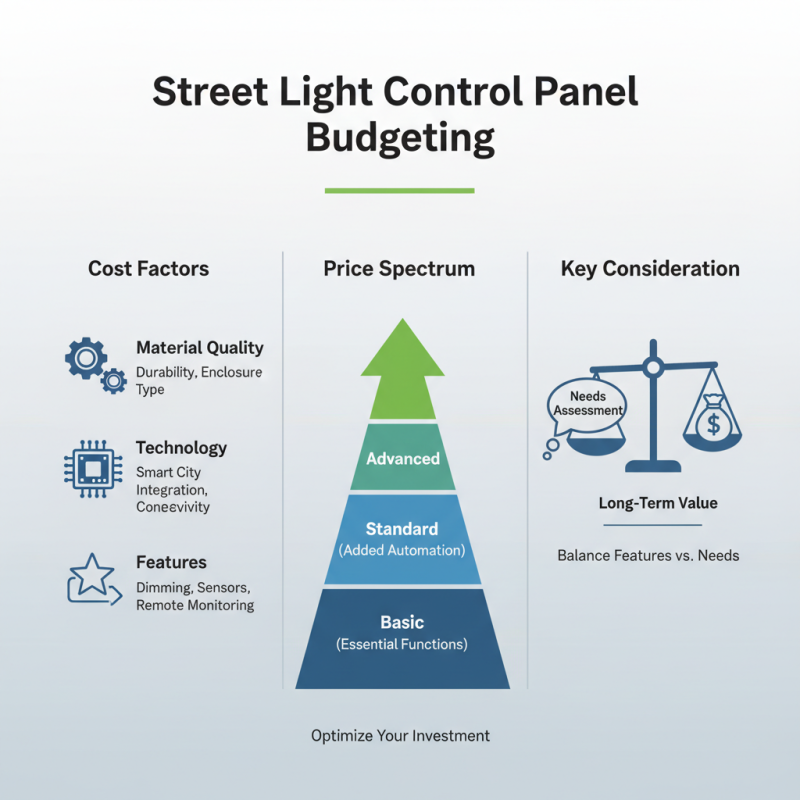
When budgeting for street light control panels, cost plays a pivotal role. Many factors influence pricing. Material quality, technology, and features can significantly affect the overall cost. A panel with advanced features often comes at a premium. However, it's essential to weigh these features against actual needs.
Consider the long-term operational costs. Cheaper panels may save money initially, but higher maintenance costs can add up over time. For example, a panel that requires frequent repairs can lead to headaches and wasted funds. Look for reliability and warranty services. Sometimes, investing more upfront yields savings in the future.
Reflect on the project scale and requirements. Smaller projects may have limited budgets, making it tempting to cut corners. However, define clear specifications for your street lighting needs. Assessing these details can prevent overspending or underspending on critical components. Finding a balance between cost and functionality is crucial for a successful investment.