2026 How to Choose the Best LED Downlight for Your Home Lighting Needs?
Choosing the best LED downlight can significantly impact your home’s ambiance. LED downlights combine efficiency and style, but the options can be overwhelming. Many homeowners struggle to find the right fit for their needs.
When selecting LED downlights, consider the brightness level. Not every room requires the same intensity of light. For instance, bright light may work well in a kitchen, but softer illumination suits a bedroom better. Energy consumption is another factor to weigh. While LED lights are energy-efficient, some models can still consume more power than necessary.
Also, take note of the color temperature. Warmer tones create a cozy atmosphere. Cooler tones are ideal for workspaces. Despite the advantages, some users report dissatisfaction with certain products. It’s essential to review options before committing to a purchase. Research is key in this choice. The right LED downlight enhances your home while reflecting your personal taste.
Understanding Different Types of LED Downlights for Home Use
When choosing LED downlights for home use, you have several options. One type is the fixed downlight. It provides a constant beam of light. This works well in areas where brightness matters, like kitchens or offices. However, it lacks flexibility. You can't change the angle easily.
Another option is the adjustable downlight. This allows you to direct light wherever it’s needed. It's perfect for highlighting artwork or creating ambiance. You might find the installation process a bit tricky. Sometimes, the angle adjustments can be stiff, leading to frustration.
Recessed downlights are popular too. These sit flush with the ceiling, offering a clean look. They save space but might not provide enough light. Consider the wattage and beam angle carefully. The wrong choice can result in dim areas or harsh lighting. Don't rush this decision; take your time to explore all your options.
2026 How to Choose the Best LED Downlight for Your Home Lighting Needs?
| Type of LED Downlight |
Lumens Output |
Wattage |
Color Temperature (Kelvin) |
Lifespan (Hours) |
Dimming Capability |
| Standard Round |
800-1000 |
10-15 |
2700-3000 |
25,000 |
Yes |
| Square LED |
700-900 |
10-13 |
3000-4000 |
30,000 |
No |
| Recessed Adjustable |
900-1200 |
12-16 |
2700-5000 |
40,000 |
Yes |
| Color Changing |
800-1100 |
10-14 |
2700-6500 |
25,000 |
Yes |
| Surface Mount |
600-800 |
8-12 |
3000-4000 |
25,000 |
No |
Evaluating Brightness and Color Temperature for Your Lighting Needs
When choosing LED downlights, brightness and color temperature are crucial.
Brightness is measured in lumens. Higher lumen ratings mean a brighter light. For instance, a downlight with 800 lumens offers ample light for a room.
But too much brightness can be overwhelming. It’s essential to find a balance.
Color temperature is another important factor. Measured in Kelvins, it affects the mood of a space. You might prefer warm white light,
around 2700K, for a cozy atmosphere. Conversely, cool white light, around 4000K, is more suitable for task-oriented areas like kitchens.
Each space in a home may require a different approach. Mixing color temperatures can create visual interest, but it can also confuse the overall look.
Consider the room's purpose. A dim living room may benefit from softer, warmer tones.
Meanwhile, a home office should have brighter, cooler lighting for productivity. Reflect on how each area feels with different settings.
Achieving the right lighting is not always straightforward. The journey of finding the ideal balance between brightness and color temperature
can lead to new insights and adjustments in your lighting choices.
Selecting the Right Size and Style for Your Space
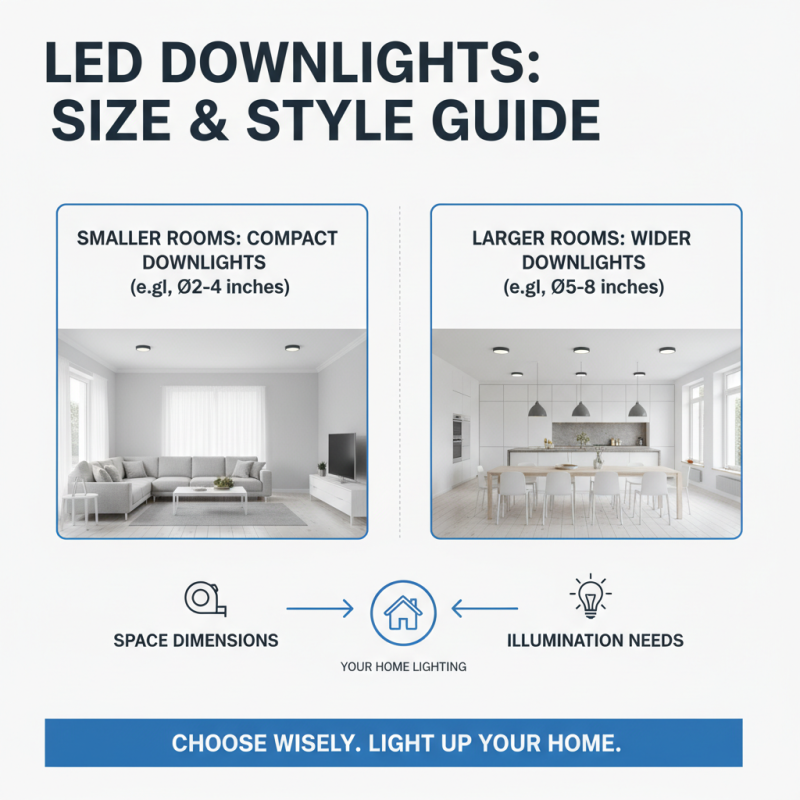
Choosing the right LED downlight for your home lighting needs involves understanding size and style. The space's dimensions and usage greatly influence your selection. A smaller room might benefit from compact downlights, while larger spaces may require wider fixtures for better illumination.
Tip: Measure your ceiling height and room size accurately. This data helps in selecting the ideal size. For example, a ceiling height of 8-10 feet typically works well with 4-6 inch downlights.
Aesthetic appeal is essential too. Different styles can either blend in or stand out. Some prefer recessed downlights for a sleek, modern look. Others enjoy decorative trim options that add character. According to industry reports, 75% of homeowners consider style as a significant factor. Creating balance in design is crucial.
Tip: Consider the color temperature as well. Warmer lights create a cozy environment, while cooler tones are great for task-oriented spaces. This choice shapes the atmosphere of your home. Reflect on your daily activities when choosing the right lighting.
Installation Options and Maintenance Tips for LED Downlights
LED downlights can enhance your home’s ambiance, but installation and maintenance are key. Choosing the right placement is essential. Think about the room's purpose. Ensure even lighting, avoiding dark spots. Use a template to mark positions on the ceiling. It's helpful to measure distances carefully. Short cables can complicate installation, so plan ahead.
Maintenance is often overlooked. Regularly check for dust accumulation. A simple wipe can boost efficiency. Consider the lifespan of the bulbs. Some might burn out sooner than expected. This can lead to uneven lighting. Keeping spares on hand can save time. Also, be mindful of electrical connections. Loose wires can cause issues down the line.
Inexperience can lead to mistakes during installation. Ensure safety first. Always turn off power while working. If you're unsure, consulting a professional might be wise. Some installation kits can be confusing. It's okay to ask for help. Taking time to reflect on these elements can create a better lighting experience.
2026 LED Downlight Choices and Installation Tips