Leave Your Message

How to Choose the Right Led Bulb for Your Home Lighting Needs?

Choosing the right LED bulb can significantly impact your home’s lighting ambiance and energy efficiency. Renowned lighting expert Dr. Emily Carter once remarked, "Selecting the right LED bulb is more than a matter of brightness; it shapes the mood of a space." With the vast availability of LED bulbs, the selection process can be overwhelming.

Many people overlook important factors when shopping. Color temperature, wattage, and lumens all play crucial roles in creating the desired atmosphere. A warm light can make a room feel cozy, while cool light adds a modern touch. In choosing LED bulbs, one must consider their specific needs and preferences.

Lighting should enhance your home, not detract from it. Reflect on what you want to achieve in each room. Uncertainty often leads to poor choices. Remember, not all LED bulbs are created equal. Taking the time to understand your options can lead to a more fulfilling lighting experience.
How to Choose the Right Led Bulb for Your Home Lighting Needs?

Understanding LED Bulb Basics: Types and Features

When it comes to choosing LED bulbs, understanding their types and features is crucial. LED bulbs come in various shapes and sizes. The common types include standard, dimmable, and smart LED bulbs. Standard bulbs work well for general lighting. Dimmable options allow you to control brightness, enhancing ambiance. Smart LED bulbs can be controlled via apps. They offer convenience and flexibility.

Features such as color temperature and lumens matter. Color temperature affects the mood of your space. Warmer tones create a cozy atmosphere. Cooler tones can enhance focus and productivity. Lumens measure brightness. More lumens equal brighter light. However, too much brightness can feel harsh. Consider the room's purpose when selecting.

Not all LED bulbs are created equal. Some may flicker or not fit into fixtures properly. Testing a bulb in-store can help avoid frustration later. Analyzing energy efficiency ratings is also essential. It determines long-term savings. Yet, the initial cost can be higher than traditional bulbs. Reflecting on these aspects helps in making informed decisions.

How to Choose the Right Led Bulb for Your Home Lighting Needs? - Understanding LED Bulb Basics: Types and Features

Bulb Type Wattage Equivalent Lumen Output Color Temperature (Kelvin) Average Lifespan (Hours) Dimmable
A19 60W 800 2700 15000 Yes
BR30 65W 700 3000 25000 Yes
PAR38 90W 1600 5000 25000 No
Candelabra 40W 450 2700 15000 Yes
Gu10 50W 500 4000 20000 No

Assessing Your Home Lighting Requirements: Brightness and Color Temperature

How to Choose the Right Led Bulb for Your Home Lighting Needs?

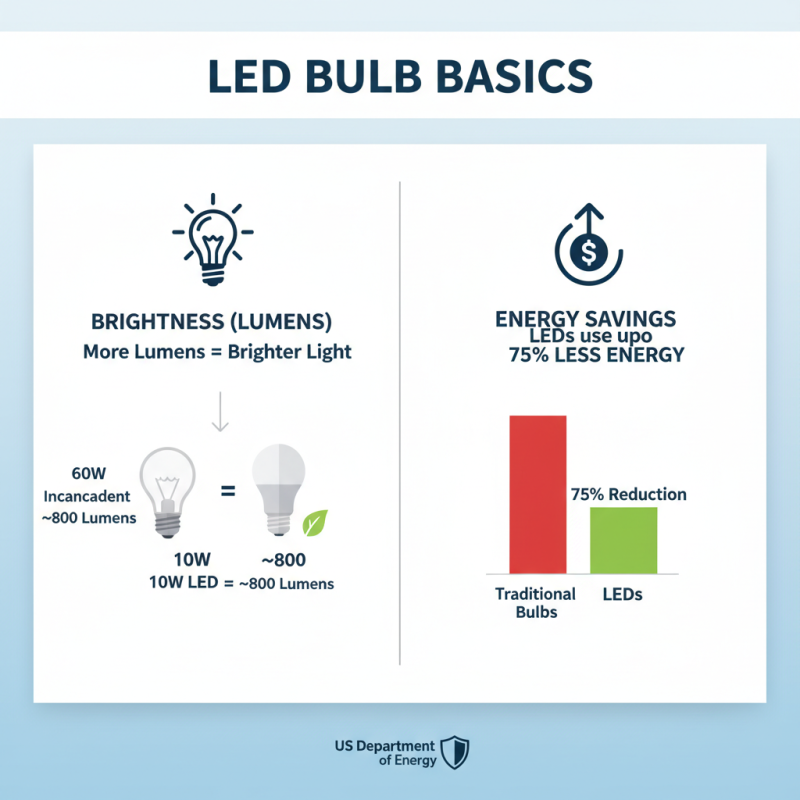
When selecting LED bulbs, understanding brightness and color temperature is crucial. Brightness, measured in lumens, indicates how much light a bulb produces. For instance, a standard 60-watt incandescent bulb emits about 800 lumens. In contrast, a 10-watt LED bulb can provide the same brightness, offering energy efficiency. According to the U.S. Department of Energy, using LED lighting can reduce overall energy consumption by up to 75% compared to traditional bulbs.

Color temperature affects the ambiance of a space. Measured in Kelvins (K), lower temperatures (around 2700K) emit a warm, cozy light. This is ideal for living rooms or bedrooms, creating a relaxing environment. On the other hand, higher temperatures (above 5000K) produce a cooler, bluish light. This can enhance focus, making it suitable for workspaces and kitchens. Despite the benefits, some people may find the cool light uncomfortable for prolonged periods, affecting their mood.

Balancing brightness and color temperature is essential for achieving the desired atmosphere. Too much light can create glare, while insufficient light can lead to eye strain. It’s worth experimenting with different options to find the perfect combination for your needs. A 2019 study revealed that 78% of people prefer the soft glow of warm light in their homes. However, personal preferences can vary significantly.

Evaluating Energy Efficiency: Watts, Lumens, and Lifespan of LED Bulbs

How to Choose the Right Led Bulb for Your Home Lighting Needs?

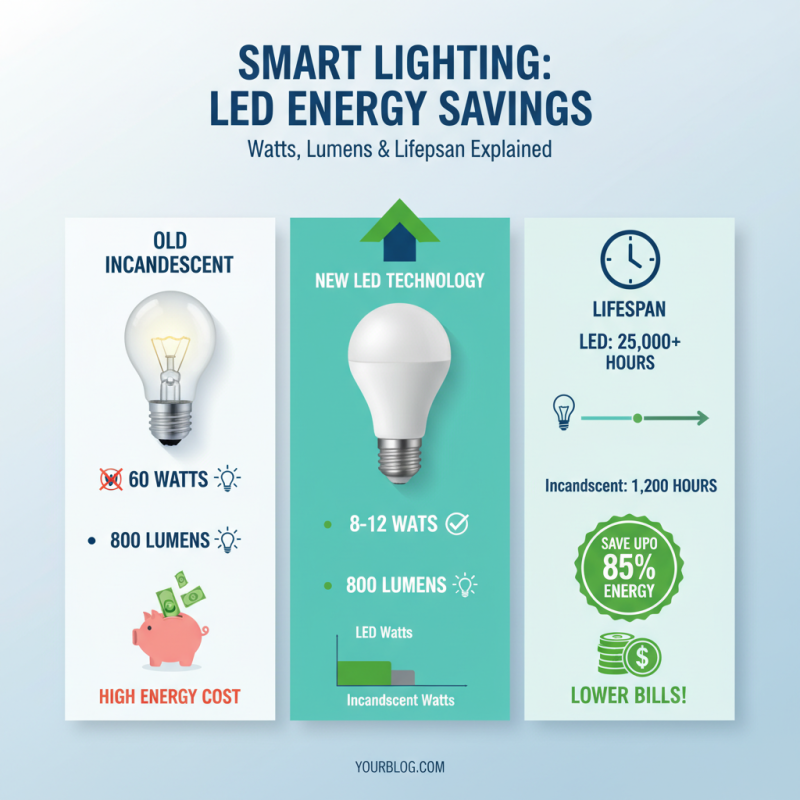
When selecting LED bulbs, energy efficiency is crucial. Understanding watts, lumens, and lifespan can help you make informed decisions. Traditional bulbs consume more watts, but LED bulbs are more efficient. A standard 60-watt incandescent bulb may only produce 800 lumens. In contrast, an LED bulb can provide the same brightness with around 8 to 12 watts. This translates to significant savings on your energy bill.

Take into account the lifespan of LED bulbs. While traditional bulbs last about 1,000 hours, LEDs can last up to 25,000 hours. This long lifespan means fewer replacements and less waste. A study by the Department of Energy indicated that widespread LED use could save over $30 billion annually in energy costs.

Tip: When purchasing, look for the Energy Star label. This guarantees that the bulb meets certain efficiency standards. Consider the color temperature as well. A bulb's color can affect the mood of your space. Warmer tones may be suitable for living areas, while cooler whites work better in workspaces. Evaluate your lighting needs carefully.

Considering Design and Aesthetics: Shape, Size, and Dimming Options

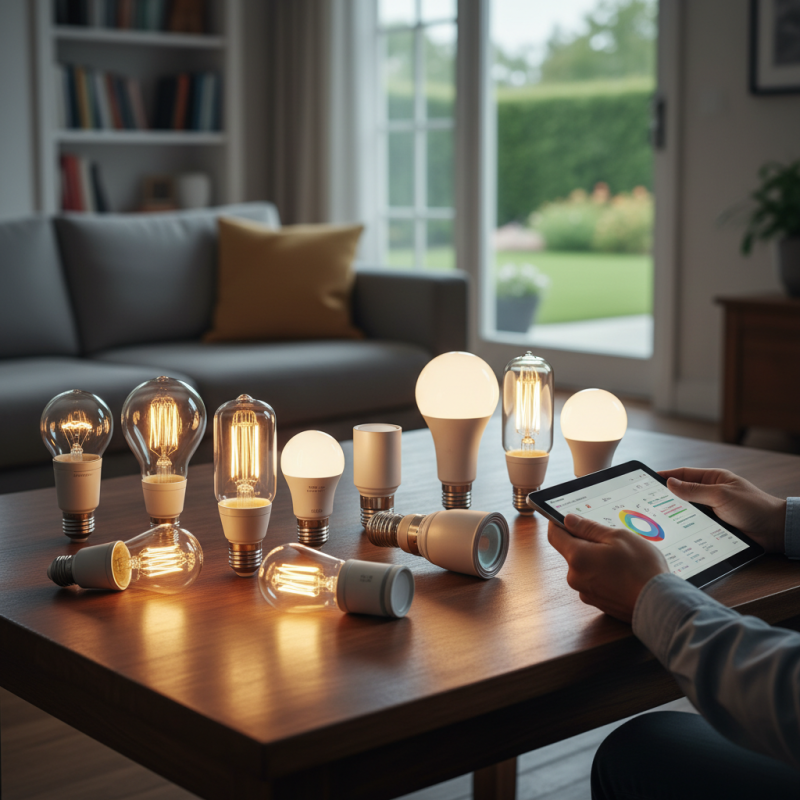
When choosing LED bulbs, design and aesthetics matter. The shape and size of the bulb can influence the room's overall look. For example, vintage-style bulbs offer a warm glow with a unique filament design. These can complement rustic interiors beautifully. On the other hand, sleek, globular designs suit modern spaces. Think about what fits your decor style best.

Dimming options can also change the ambiance significantly. Some bulbs offer versatile dimming capabilities, allowing you to adjust brightness based on the time of day. It’s important to check compatibility with your dimmer switches. If you choose a bulb that isn’t compatible, the results can be disappointing. Sometimes the light may flicker or not dim at all. Take time to test different bulbs and how they interact with your space.

Consider energy efficiency too. While many bulbs are energy-saving, not all are created equal. Some may consume more power than expected. Choosing the right bulb should be a thoughtful process. A short visit to a store can spark inspiration. Play with different options and observe how they look in your desired setting before making a decision. It’s all about creating the right feel in your home.

LED Bulb Design Options Overview

This chart illustrates the popularity of different LED bulb shapes based on consumer preferences, giving insight into how design and aesthetics influence choice for home lighting solutions.

Comparing Cost and Brand Reliability: Making an Informed Purchase Choice

When selecting the right LED bulb, cost and brand reliability are crucial factors. The LED market has grown significantly, with many options available. Reports indicate that LED products can save up to 75% more energy than traditional incandescent bulbs. This statistic highlights the importance of considering long-term savings over initial costs.

Consumers often feel overwhelmed by the myriad of choices available. Some brands promise high quality while offering lower prices. A survey from a reputable market research group found that 67% of customers prioritize brand reputation over price when purchasing LED bulbs. Reliable brands tend to offer better warranties and customer support. However, some lesser-known brands provide impressive performance at a fraction of the cost.

It is essential to compare specifications like lumen output and color temperature alongside price. Many users mistakenly choose bulbs based solely on price. This can lead to dissatisfaction with performance. Choosing an LED bulb is not just about the initial investment; it is about overall value and long-term efficiency. Take your time to explore options and read reviews. Reflect on your unique lighting needs before making a decision.