Why Choose Smart Light for Your Home Lighting Solutions?
Smart Light technology is revolutionizing home lighting solutions, combining innovation with efficiency. According to a report by the International Energy Agency, smart lighting can reduce energy consumption by up to 50%. This significant reduction not only lowers electricity bills but also enhances sustainability.
The convenience of controlling lights from anywhere adds to its appeal. A study by Statista reveals that 60% of consumers now prefer smart home devices. However, not every user finds the transition seamless. Some report difficulties integrating smart lights into existing setups. It raises questions about usability and customer support.
While Smart Light offers many benefits, challenges exist. Issues like connectivity and compatibility can hinder the experience. Owners might grapple with device updates or software glitches. Exploring these complexities is essential for a well-rounded view of smart lighting solutions. Overall, weighing the pros and cons can guide homeowners toward smarter decisions.
The Evolution of Home Lighting: From Traditional to Smart Solutions
The evolution of home lighting reflects our changing lifestyles and technological advancements. Traditional light bulbs, once the mainstay in homes, have given way to innovative solutions. Incandescent bulbs consumed more energy, leading to higher utility bills. Their warm glow created ambiance, but they lacked flexibility.
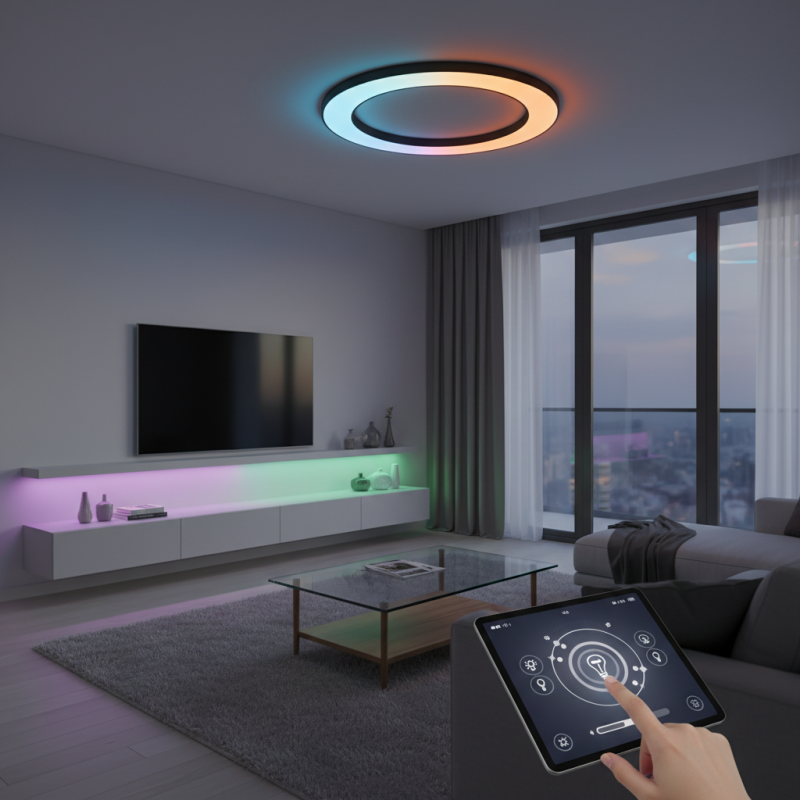
Smart lighting introduces dynamic control and customization. Imagine adjusting the light's color and intensity with a simple voice command or mobile app. The ability to schedule lights to mimic natural sunlight aligns with our daily rhythms. However, adapting to these new technologies can be challenging for some. Not everyone feels comfortable with smart devices, and installation can be confusing.
While energy efficiency and convenience are significant benefits, there are concerns too. Over-reliance on technology may lead to issues if systems fail. Additionally, privacy can be a consideration, as devices often collect data. Striking a balance between embracing advancements and maintaining simplicity is essential in this transition.
Why Choose Smart Light for Your Home Lighting Solutions?
| Feature |
Traditional Lighting |
Smart Lighting |
| Energy Efficiency |
Low |
High |
| Control Options |
Wall Switch Only |
App & Voice Control |
| Dimming Capability |
Limited |
Flexible |
| Customization |
None |
High |
| Integration with Smart Home |
No |
Yes |
| Lifespan |
1,000 hours |
15,000+ hours |
Key Features of Smart Lights: What Sets Them Apart from Conventional Lighting
Smart lights offer innovative features that set them apart. They allow users to control brightness and color from their smartphones. A recent report by Statista noted that the smart lighting market is projected to grow to over $18 billion by 2027. This growth reflects consumer demand for more personalized lighting options in homes.
Many smart lights now come with energy efficiency. According to the U.S. Department of Energy, LED lights, a common component of smart lighting, use 75% less energy than traditional incandescent bulbs. This not only reduces your electricity bill but also minimizes environmental impact. However, the initial cost of smart lighting systems can be high. Some homeowners hesitate to invest, despite long-term savings.
Another feature to consider is automation. Smart lights can sync with your daily routines. They can turn on at sunset and off at sunrise. Yet, there are challenges. Not all setups work seamlessly with every device. Users may experience connectivity issues. Balancing convenience with practicality is essential when choosing smart lights for your home.
Energy Efficiency: How Smart Lights Help Reduce Electricity Consumption
Smart lighting solutions are gaining popularity due to their significant energy efficiency. According to the U.S. Department of Energy, smart lights can reduce electricity consumption by up to 70% compared to traditional lighting. This is mainly due to their ability to dim, schedule, and control remotely. Users can set their lights to turn off when they leave home, minimizing wasted energy.
In a typical household, lighting accounts for about 15% of the total electricity bill. By switching to smart lights, users can experience tangible savings. These lights optimize energy use based on occupancy. For instance, Motion sensors can detect when no one is in a room and automatically turn lights off. Such features not only save energy but also extend the lifespan of the bulbs, reducing waste.
However, the implementation of smart lighting is not without challenges. Some users may face difficulties in setting up connections or optimizing settings. Others might find comfort in traditional modes of lighting. These obstacles could hinder the transition to smarter solutions. Homeowners should weigh their options carefully. The energy savings are clear, but ensuring user satisfaction is paramount.
Energy Efficiency Comparison of Smart Lights vs. Traditional Lights
This chart compares the annual energy consumption of smart LED lights versus traditional incandescent and CFL bulbs. As shown, smart LED lights consume significantly less energy, demonstrating their efficiency and potential for reducing electricity bills in your home.
Convenience and Control: Benefits of Smart Lighting Systems for Homeowners
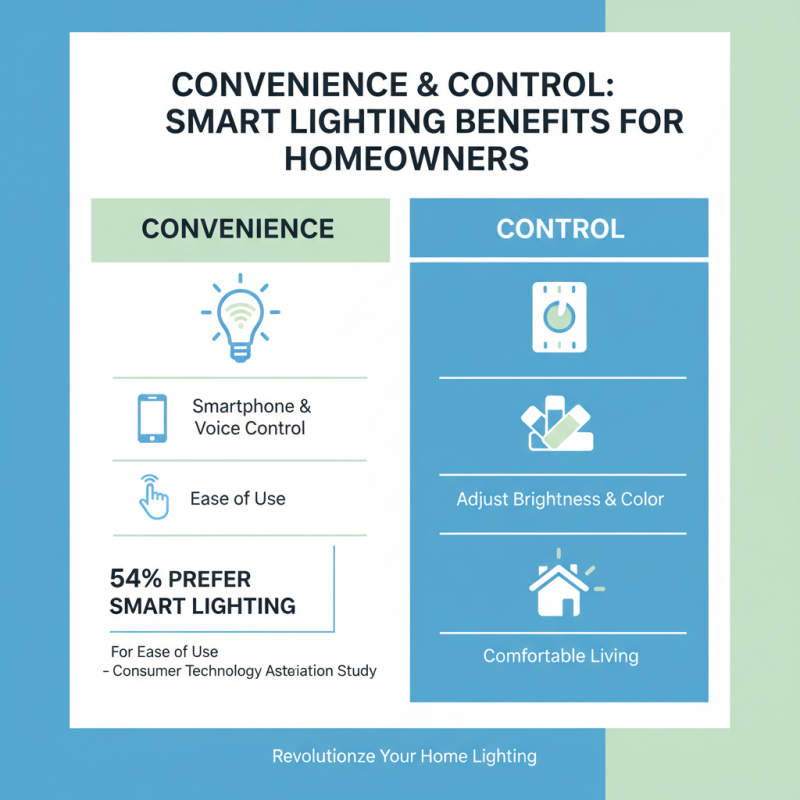
Smart lighting systems are revolutionizing home lighting solutions. They offer convenience and enhanced control for homeowners. According to a recent study by the Consumer Technology Association, 54% of smart home device owners prefer smart lighting for its ease of use. These systems allow users to adjust brightness and color through their smartphones or voice-activated devices, promoting a comfortable living environment.
Imagine coming home to a well-lit space without lifting a finger. With smart lighting, you can automate your lights based on your daily routines. A report from Navigant Research indicates that the adoption of smart home technology, including lighting, is projected to reach over 300 million installations by 2025. Despite this rapid growth, some users may struggle with initial setup or connectivity issues. This can create frustration, highlighting the need for user-friendly interfaces.
Incorporating smart lighting can significantly enhance security. Homeowners can set lights to mimic their presence while away. However, there are concerns about privacy and data security. A survey from Parks Associates found that 28% of consumers are wary of smart home devices for these reasons. It's crucial to stay informed about security protocols and updates to ensure the reliability of your smart lighting system.
Enhancing Home Security: The Role of Smart Lights in Home Safety Solutions
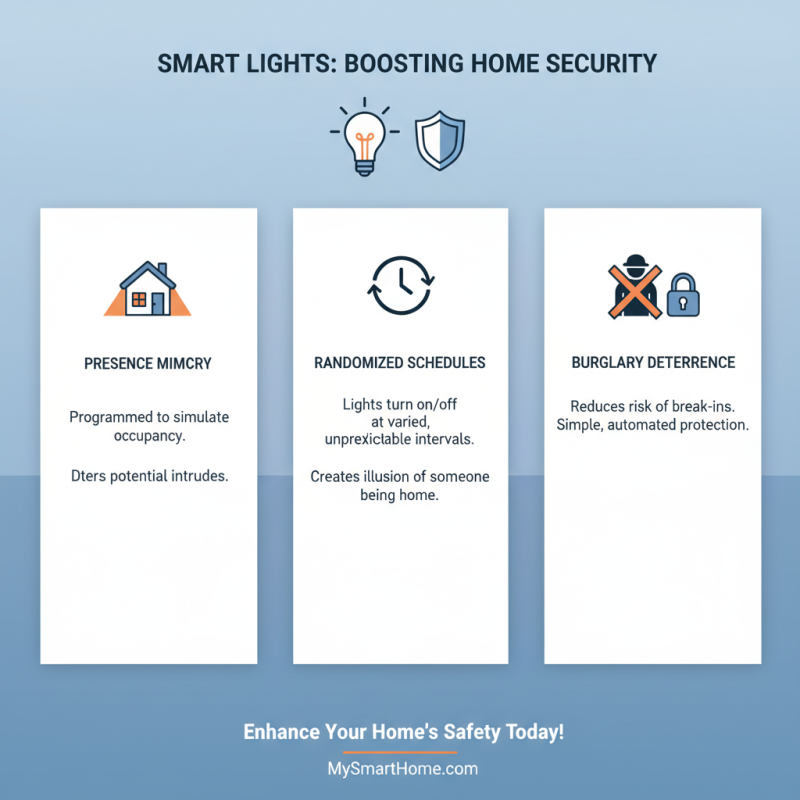
Smart lights play a critical role in enhancing home security. They can be programmed to mimic your presence, which deters unwanted visitors. For instance, when you are away, smart lights can turn on and off at various intervals. This unpredictability creates the illusion that someone is home. This simple, automated feature can reduce the risk of burglary significantly.
Installation of smart lights is generally straightforward. You can control them remotely through your smartphone, allowing you to adjust settings from anywhere. This feature provides peace of mind, especially during vacations. Imagine being able to light up your home's exterior with just a few taps, making it look lived-in and secure.
However, not all smart lighting solutions are foolproof. Sometimes, technical glitches can occur, and lights may not operate as planned. It’s also vital to ensure your Wi-Fi is secure, as vulnerabilities can compromise your system. Thus, regular updates and security checks are necessary for optimal safety. Balancing convenience with reliability is key to truly enhancing your home security.